Exhibit Like a Pro

Exhibit Like a Pro


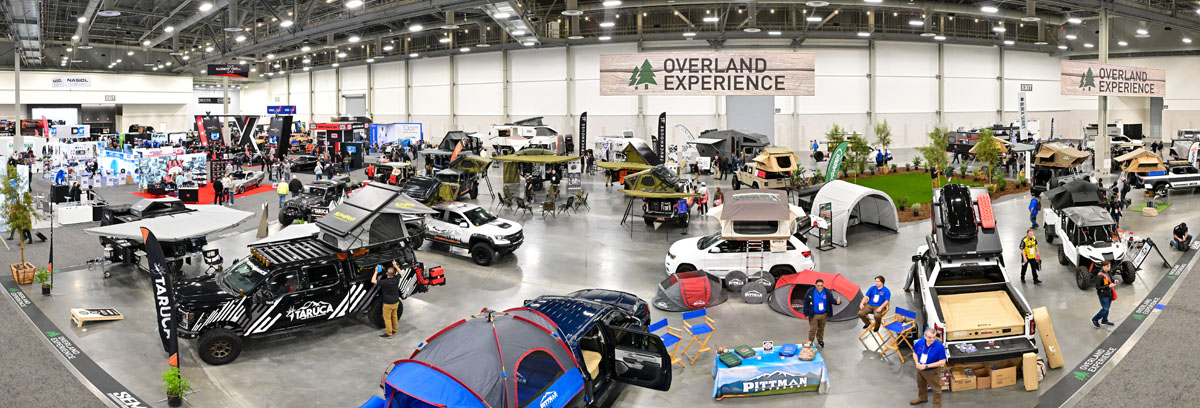
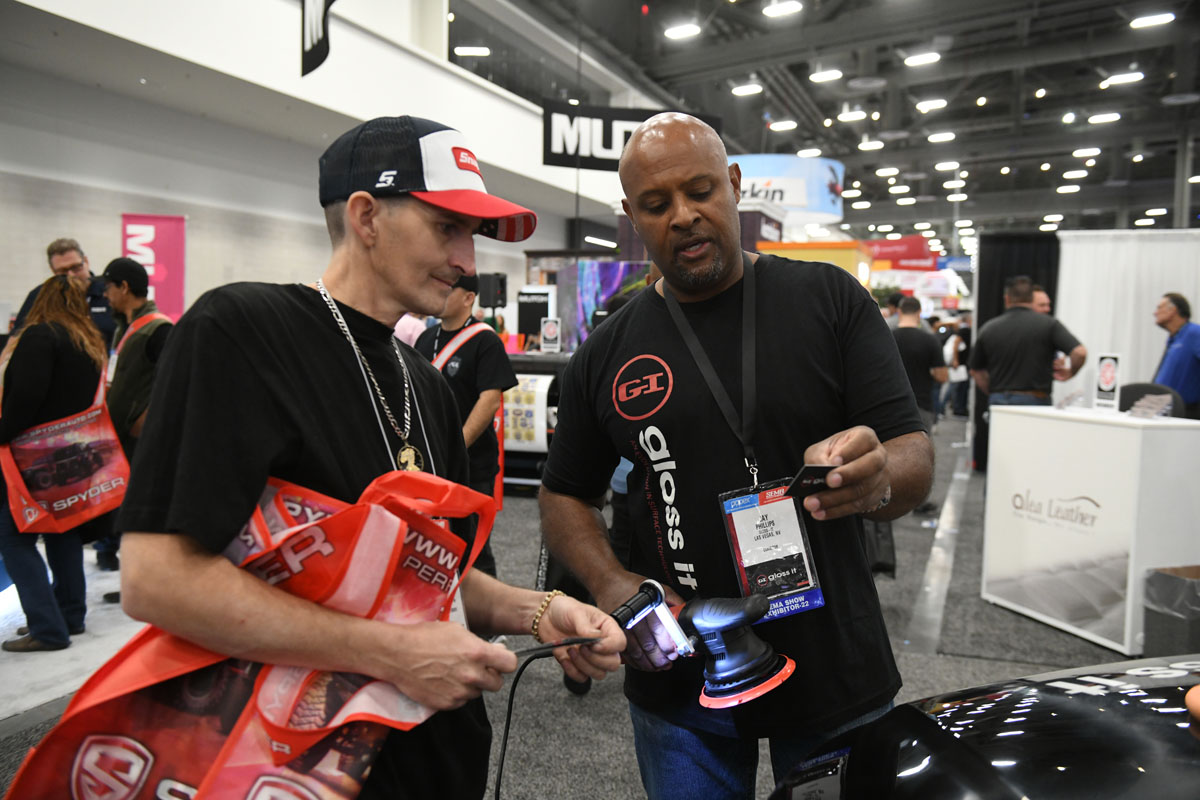
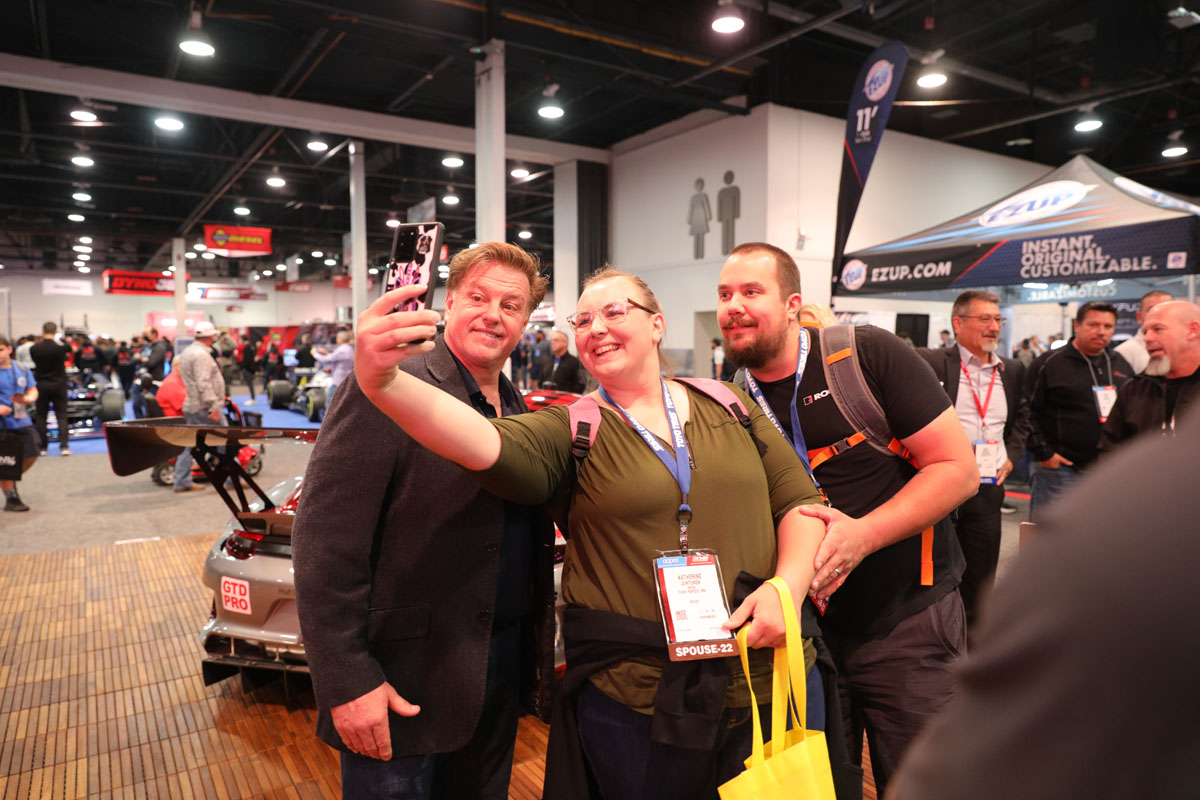
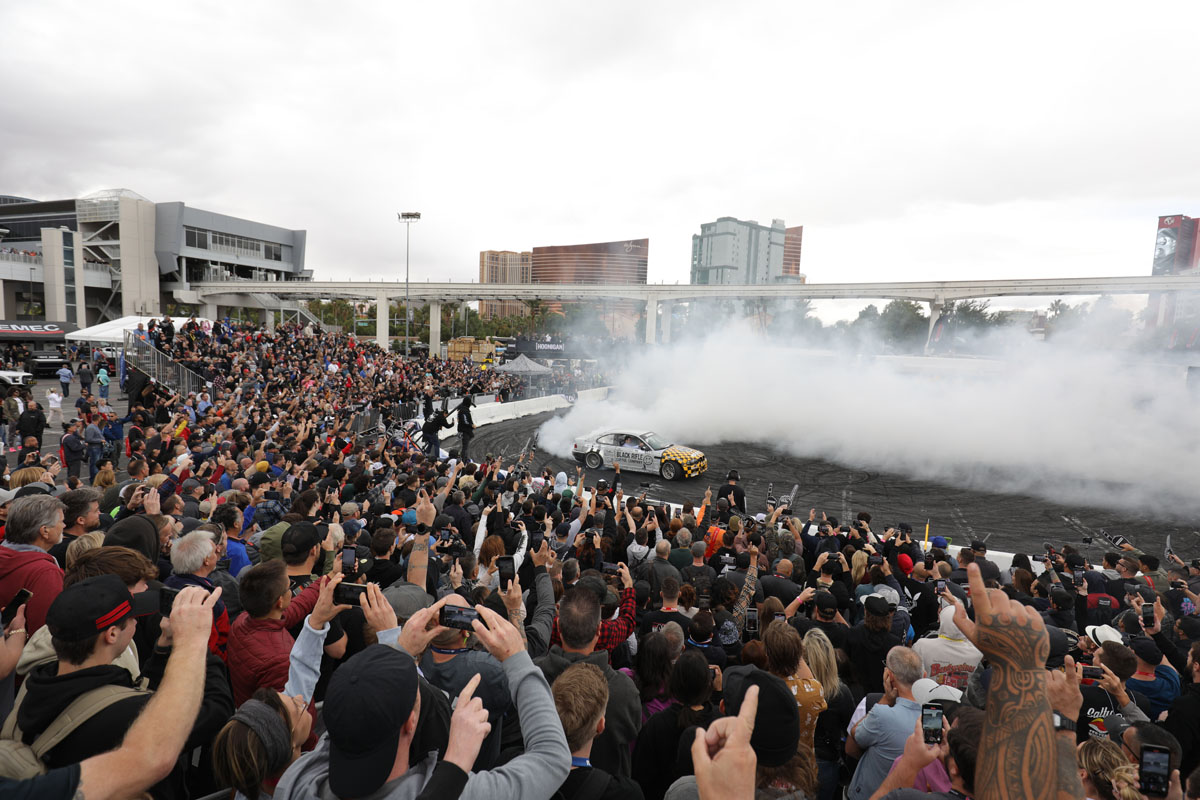
SEMA SHOW crowd and exhibitors
››› The SEMA Show draws more than 130,000 attendees each year. The Show arms exhibitors with many cost-effective tools for connecting with the buyers they want to see.

FIVE Tried-and-True SEMA Show Best Practices to Save Money and Boost Your ROI

››› By Mike Imlay

With the countdown on to the 2023 SEMA Show, industry manufacturers and suppliers are busily working on their exhibition strategies for the annual trade event, set for October 31–November 3 at the Las Vegas Convention Center. At press time, the Show was on track to top 2,000 exhibitors eager to launch their latest innovations, highlight existing products and strengthen business connections at the industry's premier trade gathering.

"The SEMA Show is one of the highest attended trade shows in the United States each year," said SEMA Trade Show Director Andy Tompkins, explaining the enthusiasm. "If you as an exhibitor are absent, then the narrative and perception of your business within the industry is out of your control, and possibly worse, it gives your competition the chance to tell a better story."

But more than just being there, experienced exhibitors know that ultimate return on investment (ROI) rests on solid pre-Show planning. The event attracts more than 130,000 attendees, including more than 70,000 buyers and decision-makers from around the world each year. That presents a massive potential audience, and there are tried and true ways for exhibitors to leverage it.

"The size of your exhibit is less important than the fact that you are at the Show, executing a game plan and following through on the business connections you make. That's the recipe for success," noted Tompkins. "Companies that approach SEMA Week passively can easily miss out on customers and prospects. Fortunately, the Show has many built-in features to help businesses of all sizes minimize overall costs while effectively amplifying their presence."

With that in mind, the following are some expert tips that will have your company exhibiting like a seasoned pro.

1. Take Advantage of Value-Added SEMA Show Programs

Of all the Show features that can boost traffic to your booth, the New Products Showcase remains in a class by itself. Year after year, surveys confirm that it is the No. 1 buyer destination—and often their first stop—at the Show.

"We promote the Showcase aggressively," explained Tompkins. "It highlights your new products and creates what we refer to as 'breadcrumbs' right to your booth." That's because each product gets a scannable code that links buyers to your place on the show floor via the SEMA Show app. Plus, Tompkins adds, "the first product you enter is free, with additional products costing $95 before October 6 and $150 after that. So it's a great opportunity to generate leads and exposure for very little cost, especially if you take advantage of early deadlines."

Beyond the Showcase, exhibitors can leverage other publicity tools. "When you purchase booth space, you automatically get a listing in the print and online Show directories, plus the mobile app. So make sure your company name, product categories, contact information and other data is up to date and correct," advised Tompkins.

Exhibitors can also submit free press releases to the SEMA Show Online Media Center in advance of SEMA Week to help build buzz.

"You can also increase your lead capture and the Show with our CSI lead retrieval program. It's an app-based tool that lets you scan a contact's badge to store and access their info. It's a great advantage for exhibitors," said Tompkins.

2. Use Proven Strategies to Pull Buyers to Your Booth

The key to attracting buyers at the Show is to actually start inviting them to your booth before the Show. "You really want to think about a 30-day plan leading up to the Show," recommended Tompkins. When exhibitors register for the Show, they gain access to tools allowing them to send alerts and registration links to customers. Any pre-Show publicity should include your booth number, new and featured products you plan to exhibit, and demonstrations or opportunities they'll encounter in your exhibit.

"Think deeply about the 'why' of visiting your booth," added Tompkins. "Will you have a show special? Anything unique that you're offering? An event that you're planning or celebrity signing or meet and greet? You want to differentiate yourself from the competition and neighboring booths."

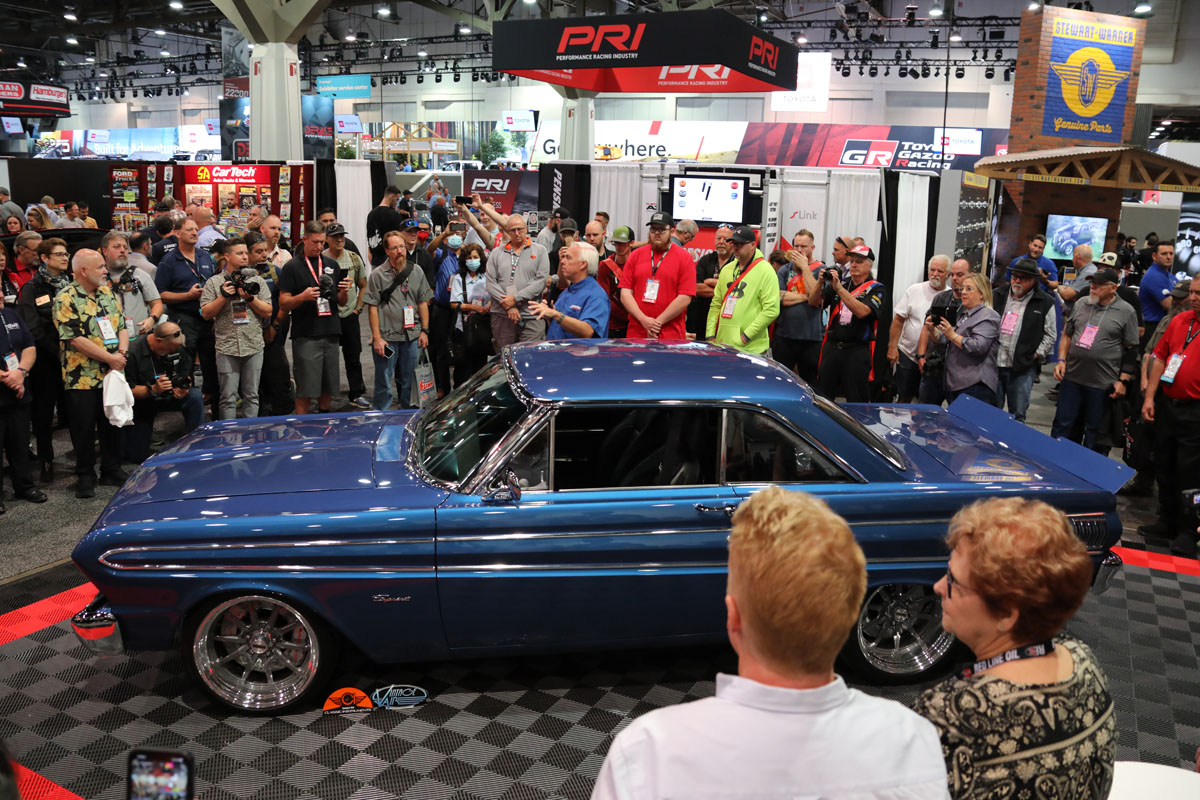
Of course, at the SEMA Show, a vehicle display can speak volumes. "A vehicle in your booth will certainly draw attention. But even if you can't do that, you can feature or sponsor a vehicle elsewhere at the Show," Tompkins noted. Like products displayed in the New Products Showcase, feature vehicles have scannable codes that link to all the products and brands used in the vehicle build, along with the booth locations of the product suppliers.


››› Placing one or more new or feature products into the New Products Showcase is among the most successful strategies for luring attendees to a booth. Don't miss taking advantage of it.

3. Plan, Budget and Leverage Resources to Control Show Costs

Lowering the costs associated with exhibiting begins with watching deadlines. "The most tangible opportunity is to make sure you order all your Freeman services before their September 28 discount deadline," Tompkins emphasized. "That actually delivers a 40% savings on basically any service you order, from material handling to having a sign hung over your booth—the whole host of services that Freeman offers."

"We also have material handling built into booth purchases. For example, if you have 400 sq. ft. or less of exhibit space, you get up to 500 lbs. of material handling at no extra cost. That means you can get most of your freight into the building for no additional cost."

Regularly consulting the SEMA Show Exhibitor Services Manual (ESM) will also help you stay on top of deadlines—and save you time and money in other ways.

Meanwhile, thinking carefully about your exhibit space can further control costs. Make a realistic appraisal of the staffing and display-related items you'll require. Assess your electrical, lighting and internet needs, along with any necessary signage, graphics, furnishings, literature and collateral or promotional items. Try to anticipate the booth traffic flow. Mock out your booth design well in advance of the Show to help brainstorm what you really need and eliminate waste.

"You can maximize savings by really streamlining things," underscored Tompkins. "Consider your goals: Do you need to accommodate multiple appointments at once? Do you need multiple sales stations? Would you like somebody to meet and greet your customers so they can make sure they're connecting with the right employee?"

The SEMA Show ESM also features a Budget Checklist to further help exhibitors control costs. "You really want to utilize our Budget Checklist because it's going to walk you through a whole series of ways you can plan and save money and time at the Show," said Tompkins. "One example is the different opportunities you have to ship your freight to the Show. If you utilize our advanced warehouse or ship to Show site, that can not only help you with setup, but maximize your time. With the advance warehouse, Freeman can guarantee the day your freight will arrive on the Show floor. You'll be ready to go. That's just one
money-saving tip."

Of course, exhibiting at the SEMA Show also involves transportation and accommodation expenses. Here again, Show management has worked to help exhibitors control their costs by negotiating discounted transportation and lodging packages with major airlines and key Las Vegas hotels. Alaska, Delta and United are among the airlines offering the discounted, round-trip airfares to Las Vegas.

Meanwhile, making hotel reservations in the "SEMA Show block" provides exhibitors with the most affordable and convenient options for a wide range of hotels located on and off the Strip while locking in guaranteed lowest rates. Many of the hotels offer easy access to the Las Vegas monorail system, further saving on commuting costs to and from the convention center and other city destinations. All these travel and lodging options can be found at
www.SEMAshow.com.


››› Booth demonstrations are a key advantage of face-to-face trade shows, and a prime way to pique buyer interest. Think carefully about the feng shui of your booth.

4. Work With Show Experts to Maximize Your ROI


"One often overlooked resource is our SEMA Show sales reps," said Tompkins. "I really want to emphasize turning to them because I don't think many exhibitors realize that they can just pick up the phone and call their rep at any time. Our reps are well-trained to help them through every phase of exhibiting and answer any questions or concerns."

Exhibitors can connect with their SEMA Show representatives through the SEMA website (www.SEMAShow.com/contact), its general phone number at 909-610-2030 by email at semashow@sema.org. No question or concern is too big or trivial for your rep to help with.

"We're always happy to answer any questions and help make sure you maximize your ROI on-site at the Show," Tompkins emphasized. "Plus, there's a Freeman concierge service that can answer questions and provide on-site tips to help save on setup costs. SEMA also shares tips through emails and regular SEMA News digital content leading up to the Show, so you'll want to tap in to those
resources too."

5. Explore Promotional Opportunities

It's a simple fact: booth promotion boosts traffic. A good exhibiting strategy will embrace pre-Show, on-site and post-Show follow-up, and sponsorships can play a important role.

"From a sponsorship perspective, SEMA offers a variety of opportunities," said Tompkins. "Whether through SEMA News, both the printed and digital versions, through the SEMA Show mobile app, or through a variety of other pre-Show communications, we can help you reach your audience before they arrive in Vegas."

"Once they're on-site, there's a whole other variety of potential touchpoints, including banners, aisle signs, billboards, carpet decals or meter boards—just all sorts of ways to reinforce your brand and booth location as people walk around
the Show."

Whether or not exhibitors take advantage of official SEMA Show programs, they should pay close attention to augmenting their promotional materials with digital assets like QR codes, which can help immerse their audience in a marketing experience. Pens, lanyards, tote bags and other keepsakes can also extend that brand messaging beyond the Show.

"When it comes to promotions or sponsorships, think about where you most need to engage your audience, where you need the most support," advised Tompkins. "I'd also stress that your SEMA Show rep can be your liaison here. They're adept at helping you customize your experience and choose the right sponsorship. Some opportunities can be bundled—things like aisle signs and being in the SEMA Show Directory and having a page in SEMA News or the SEMA Show Pocket Guide."

Moreover, there are SEMA Show promo packages tailored to any exhibitor size. One online promo tool costs just $545, and there are ways to get ads into SEMA News properties for less than $1,000. "For a relatively low investment, you're going to gain a much more visible presence," Tompkins explained.


››› Carefully watching deadlines and taking advantage of the Show's built-in discounts can save you time, money and effort on your move-in day, increasing your ROI.

Bonus Tip: Enhance Your Show Experience


Beyond the show floor, the SEMA Show offers countless networking opportunities,
demonstrations, vehicle displays and live-action features to keep you abreast of where the industry is headed. More than that, it offers world-class speaker presentations and educational seminars that can help advance your personal, business and employee-development goals. Best of all, most of them are free.

"Our educational opportunities embrace a lot of different ideas and practical instruction to become more successful in your business, learn digital marketing techniques, and advance a variety of other skills. And if you have people you're trying to grow, nurture and mentor, these are great tools that you can take advantage of," Tompkins pointed out.

Conclusion


When leveraged properly, a live trade event offers unmatched opportunity for face-to-face connections with existing and potential new business customers. Time and again—in both bullish and bearish markets—exhibiting at the SEMA Show has proven a sound investment for business growth.

"Sometimes in an uncertain economy, your reaction can be to make drastic cuts, sit things out, or avoid the additional investment it can take to reach out to customers before, during or after the Show," conceded Tompkins. "But consider that your customers are going to be looking for confidence from you as a brand. They want to know that you're going to be there for them, that you're there to answer questions, that you're going to be shipping the product that they need and rely on. So really, being at the SEMA Show offers a great return on investment. All it takes is the right strategy."

The SEMA Show Exhibitor Services Manual (ESM)

The ESM is a vital online information tool assembled by SEMA Show management to assist exhibitors with every phase of their Show experience. Consulting the manual early and often can help exhibitors save money, time and effort while maximizing return on investment. Organized for convenience, the ESM contains the following detailed categories of information:

  • Show Guidelines and Policies
  • Deadline Dates
  • Marketing Opportunities
  • Meeting-Room Applications
  • Vehicle/Car Display Opportunities
  • Target Times—When Your Freight Must Be at Your Booth
  • General Service Contractor Information
  • Shipping Information

"For exhibitors, the ESM is a one-stop guide to leveraging the Show," said SEMA Trade Show Director Andy Tompkins. "It includes a deadline checklist, which is a great way to make sure you're not missing any discount deadlines and other cost-saving opportunities."

To access this valuable planning resource, go to www.SEMAShow.com/ESM.


Industry Exhibitors and Buyers Geared Up for the 2023 SEMA Show

Eager to connect with buyers and media in person, introduce new products, develop relationships and tell their company stories, the 2023 SEMA Show was on track to exceed 2,000 exhibiting companies at this article's press time.

An up-to-date exhibitor list of the major automakers, iconic aftermarket brands, and new, first-time exhibitors confirmed for the Show can be viewed at www.SEMAshow.com/floorplan (below, left). Meanwhile, key buying organizations attending the Show can be found at www.SEMAshow.com/buyer-highlights.

Exhibiting at the SEMA Show puts your latest products in front of tens of thousands of qualified buyers from every segment of the specialty-equipment industry. If you haven't yet added your company to the roster, there's still time. Go to www.SEMAShow.com.
 

Introducing Bessie, SEMA's AI-Powered Chatbot for All Your SEMA Show Questions and Needs!

Introducing Bessie, SEMA's AI-Powered Chatbot for All Your SEMA Show Questions and Needs!


By SEMA News Editors

Officials with the SEMA Show are excited to introduceBessie a top-of-the-line attendee resource, Bessie, the AI-powered chatbot designed to answer all your SEMA Show questions. 

SEMA Show's Bessie AI-powered chatbot will complement SEMAShow.com and the SEMA Show mobile app, plus all the on-site collateral, signage and related resources to help attendees maximize their time at the SEMA Show, October 31-November 3, in Las Vegas.

Chatting with Bessie is easy: just download the SEMA Show mobile app, visit SEMAShow.com or look for signage around the SEMA Show campus for the direct text number to access pertinent information right at your fingertips, anytime, anywhere. QR codes will also be placed around the SEMA Show campus, providing convenient access.

"Providing relevant Show information to attendees, at the right time, in the right format, is a priority for SEMA. Bessie, our new chatbot resource, puts answers to many frequently asked Show questions right at your fingertips. And since it can be accessed via QR code, direct text, via SEMAShow.com and our official mobile app, it is a great new complement to existing Show tools and provides another resource to navigate the Show and maximize experiences." 

This new resource aims to: 

  • Enhance attendee interactions, offer personalized assistance and enrich the premier, trade-only event for all participants. 
  • Build a stronger, more engaged community by improving overall attendee satisfaction through timely Show information. 
  • Offer SEMA Show attendees a new text-based/SMS solution and convenient means to deliver information to mobile devices. 
  • Create a resource that offers year-round, instant (less than 3 seconds) answers and personalized responses to attendee questions. 

SEMA has selected 42Chat as the exclusive chatbot provider for the SEMA Show. 42Chat's advanced AI-powered bots have been an integral part of many successful events and festivals, providing value to communities with instant answers and building trust through a customer-first approach to increase event engagement. 

42Chat's unique technology combines chatbots, text and micro-apps to help solve business problems. 

The proprietary conversation engine responds to millions of different ways attendees will ask questions (not just specific keywords) to provide the information the attendees need, when they need it. 

And, Bessie the AI chatbot will learn as it develops, so have fun getting to know the SEMA Show a little better! And, if you happen to "stump" Bessie with a question, it will share the information as it learns what questions the global community is asking the most, elevating the SEMA Show experience for years to come.


Using SEMA's chatbot service is completely up to the user, and mobile numbers collected during the engagement process will be used for emergency purposes only. Users have the option to opt out at any time.

Q&A: Maximizing ROI at the 2023 SEMA Show

Q&A: Maximizing ROI at the 2023 SEMA Show


››› With exhibitor numbers expected to top 2,000 companies, buyers and media will have plenty to explore live and in-person at the 2023 SEMA Show.


"You Can't Smell Burning Rubber on a Zoom Call." Why and How Attendees Can Get the Most From a Live Event

By Mike Imlay

Automotive specialty-equipment manufacturers are geared up and eager to connect with attendees at the 2023 SEMA Show, taking place October 31–November 3 in Las Vegas. With exhibitor numbers expected to top 2,000 companies, buyers and media will have plenty to explore at the Las Vegas Convention Center.

"The commitment we've seen from exhibitors is a positive sign that companies are excited to reconnect face-to-face," said Tom Gattuso, SEMA vice president of events. "It's also a sign that companies are confident that they will have new products and stories to share."

Meanwhile, SEMA officials are finalizing new features to further evolve the Show and deepen attendee engagement. To help attendees get their best return on energy and investment, we turned to Gattuso and SEMA Trade Show Director Andy Tompkins for some behind-the-scenes insights.

SN: There's been a lot of talk in the media about how trade events are changing. In a world of Zoom, Microsoft Teams and social media, what is the value of a live trade event like the SEMA Show?

Tom Gattuso: I'd go a step further and ask, "What is the value of face-to-face events?" We find a tremendous positive response from the people who attend the SEMA Show. They value connecting in person with their end users or future suppliers and industry colleagues. There's just no replacement for what you can see, hear and feel in terms of industry passion and enthusiasm on-site at the Show. You just can't replace that peer-to-peer exchange, and you can't smell burning rubber on a Zoom call.

Andy Tompkins: I'd underscore the value of relationships. The SEMA Show gathers the entire industry in one place so people can do business with one another, regardless of how technology is accelerating. It's a great opportunity to rekindle relationships, develop new ones, and have significant conversations. It can be difficult at times to solve business issues and more nuanced situations through technology like the phone, internet or email. A trade show offers the chance to look somebody in the eye and really talk about your issues and goals. You can pick up on non-verbal cues and have more innate conversations that are really part of our DNA.
SN: Part of business is ensuring return on investment and energy. What does the SEMA Show offer attendees in that regard?

TG: In 2021, the SEMA Show was the highest attended trade show in the United States. That emphasizes the value people see in our Show. It reflects the trends and interactions within the marketplace and is set up to help people make connections efficiently and then foster those connections for the next one, three and five years. And that's important—return on energy doesn't stop at the Show.

Connections need to be followed up with periodic conversations throughout the year because if you don't do that, others will. If your plan is to come to the SEMA Show and try your hardest for four days but then do nothing else, you're not going to see a good ROI. But if you come to the Show to make connections that you plan to nurture over the next weeks, months and years, you will definitely get a very strong return.

AT: It's so important to have goals as you enter the SEMA Show and really think about what ROI means to you. Do you have a three- to five-year strategic plan? The SEMA Show offers a long-term opportunity to truly think about what's coming next for the industry. It helps you see business challenges or opportunities that you might not be aware of. It's a glimpse of the future that you can only get from a global, immersive event like our Show.

As Tom mentioned, relationships are built that can deliver for your business in the future. They might be those
serendipitous moments in the aisles, a conversation that sparked an idea, or a tangible business opportunity you're working on that needs time and connections to develop. That face-to-face interface is just so enormous.


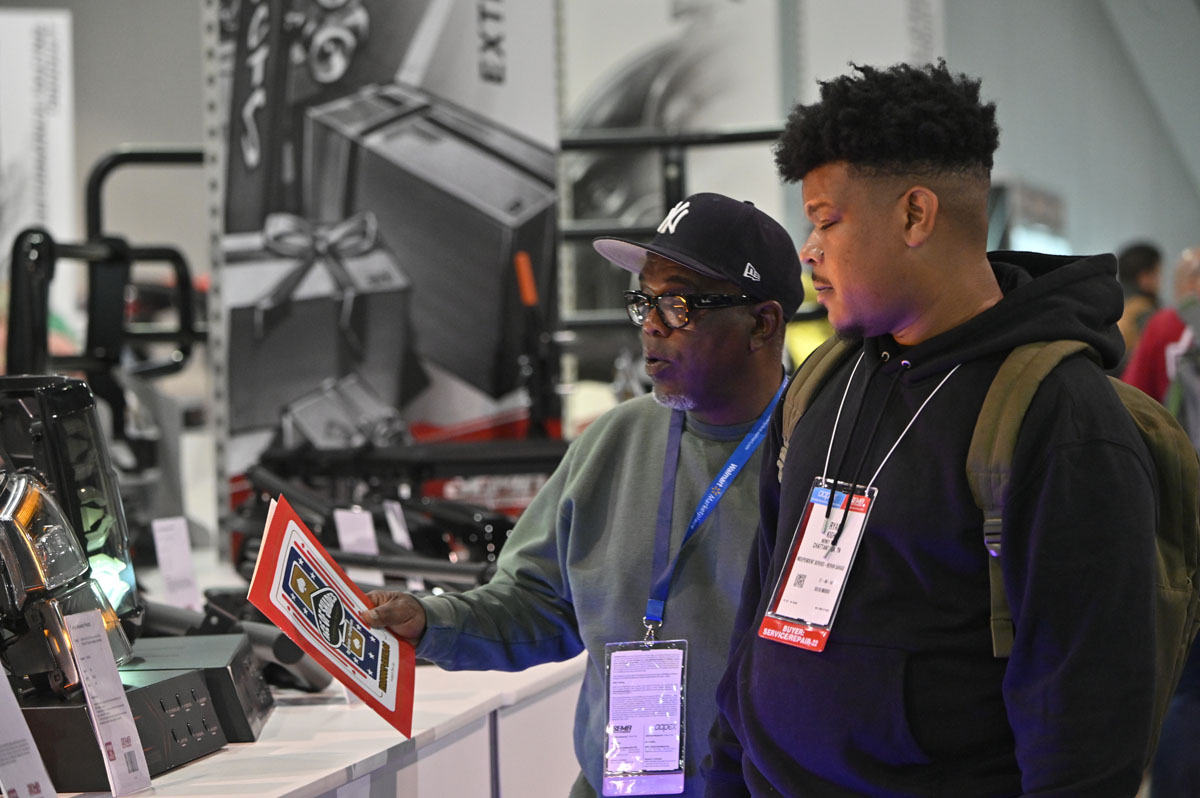
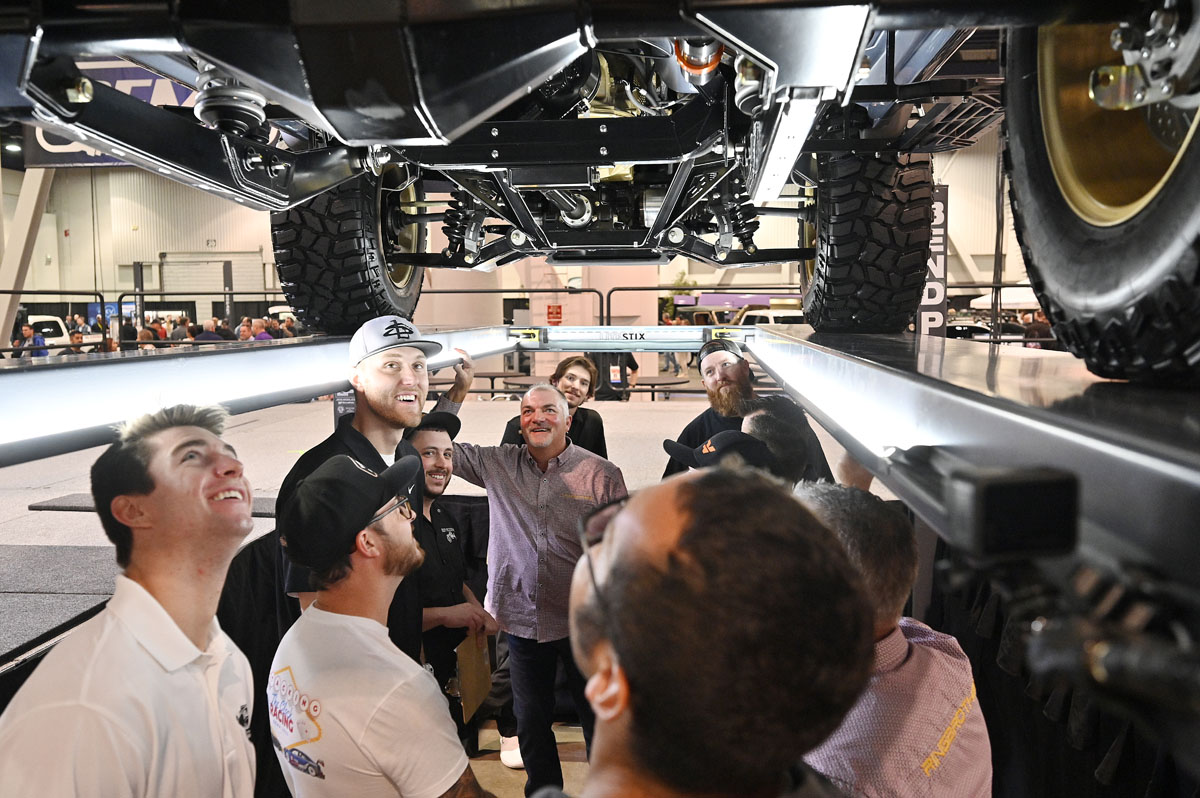
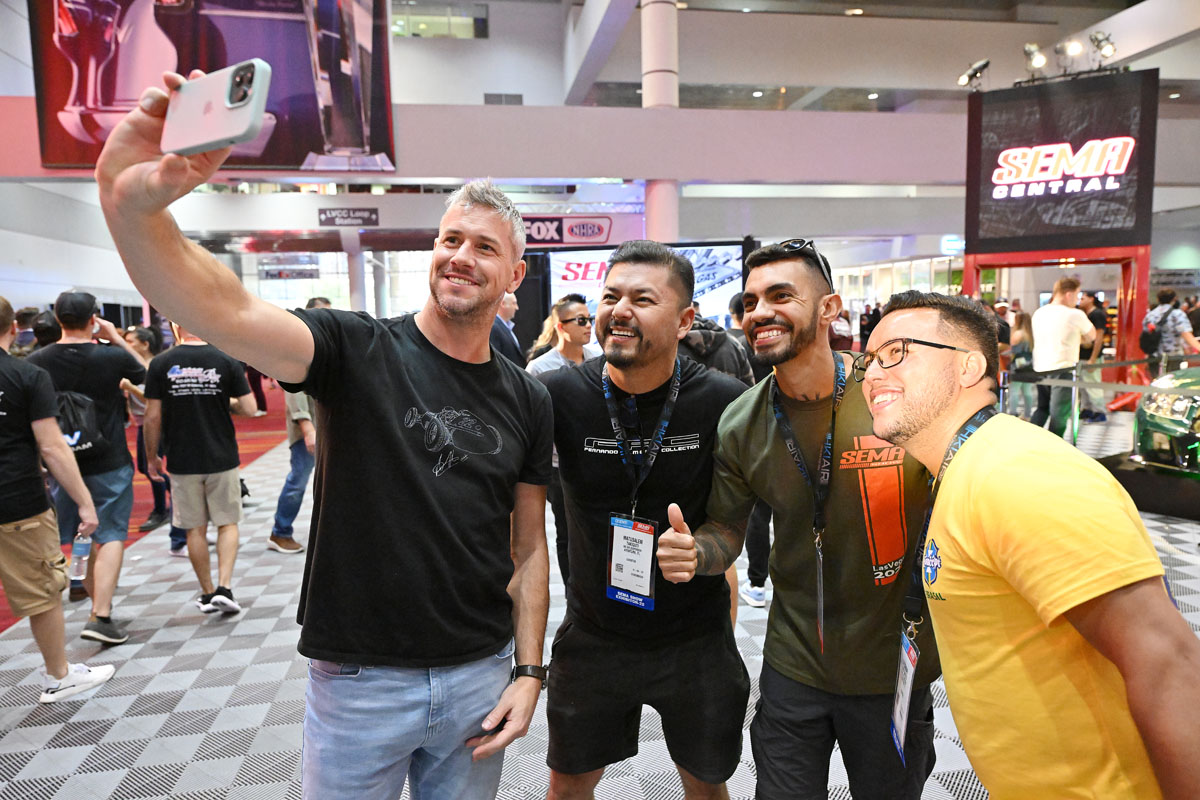
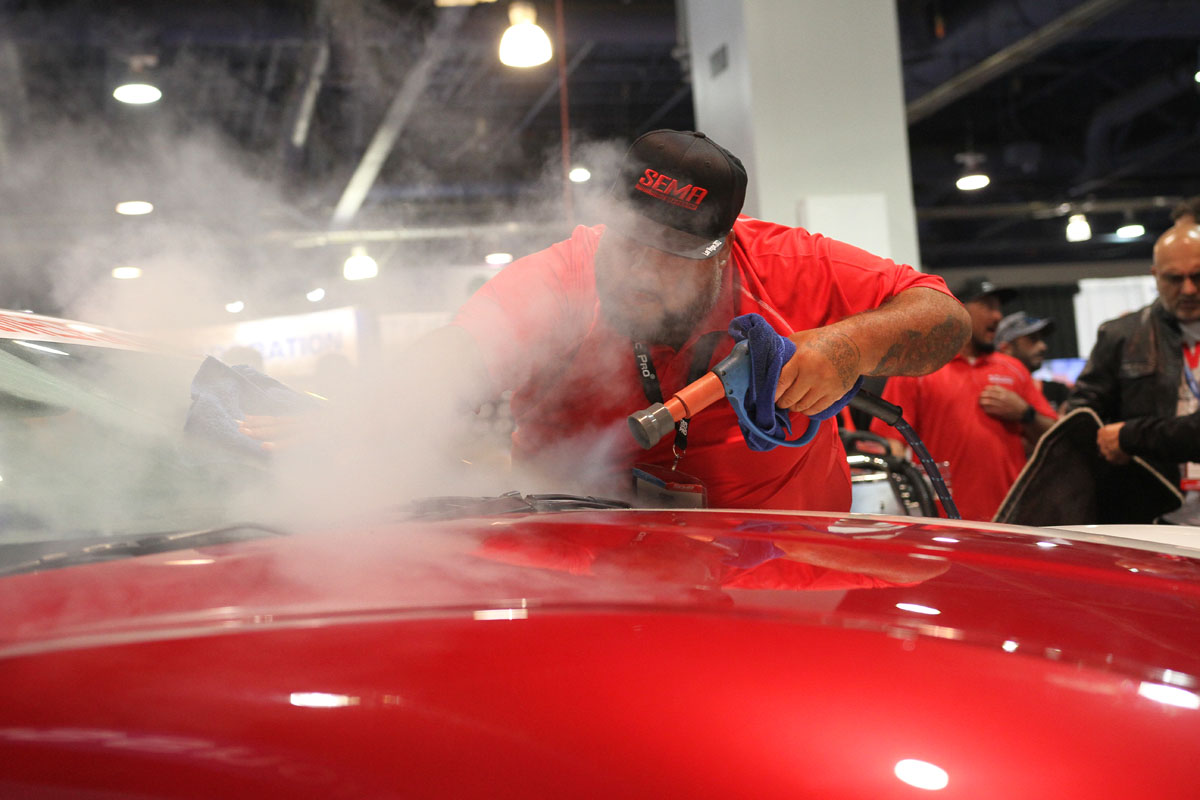
››› Seeing product displayed, explained and demonstrated face-to-face is one of the SEMA Show's many exclusive advantages.

››› As SEMA Show organizers like to say, "You can't smell burning rubber on a Zoom call." Live events and demonstrations help immerse attendees in industry trends, innovation and excitement.

SN: Maintaining an edge in today's market is more vital than ever. How does the SEMA Show help attendees stay competitive?

AT: The Show is a great opportunity for that. You'll have the entire landscape of industry products in one location so you can see firsthand what's being introduced and how it's being marketed. You'll get an understanding of the buzz over not only what the business audience sees, but what consumers are gravitating towards through the Show's Friday Experience. If you're looking for skills that you and your team may need, there are also the Show's educational opportunities. You'll also see where you stack up in the marketplace from a competitive angle. You'll be in the best position to utilize it all to be successful going forward.

TG: I'm going to key in on the word "innovation." A sustainable business is about constant innovation and evolution in answering consumer needs. That manifests itself at the SEMA Show through new products, cutting-edge vehicle builds and world-class education. You're able to be part of where the industry is going. There's no place as passionate about the industry's growth as the SEMA Show. Vehicles keep evolving in technology, performance and styling, and the Show immerses you in all of it to help you stay up-to-speed and competitive.

SN: Let's talk about some key 2023 Show features that attendees will want to leverage.

AT: They'll see thousands of products on display from our New Product Showcase to our more than 2,000 exhibitors, many of whom are debuting them for the first time. Again, our educational tracks offer a whole series of ways to fine-tune your business and your career, along with presenting some skills you might want to work on personally. Then there's just the experience, the chance to get out of your day-to-day work to really think about what's next and those inspirational opportunities that come from being immersed with thousands of like-minded peers.

TG: Building on what Andy said, I'd add that our New Products Showcase and features like SEMA Central, SEMA Electrified and the ADAS and Overland Experience sections are designed to educate attendees on the latest marketplace trends. More than that, they make it efficient for Showgoers to connect with product exhibitors on the Show floor, get questions answered by experts, and see hands-on product demonstrations. We've also made it easy to connect with exhibitors whose products are found on featured and sponsored vehicle builds throughout the Show.
In addition to educational seminars, keynote events and presentations, there are also countless other ways to advance your professional development and become an asset to your company or business. For example, our Battle of the Builders program highlights what's happening in the builder community and what's coming next there. We have a whole series of council events and other industry activities that help you network and immerse yourself in the marketplace. You can connect to become part of the industry's next generation of leaders or support them and the industry's diversity. There are opportunities everywhere.

Industry Exhibitors Geared Up for 2023 SEMA Show Attendees

Eager to connect with buyers and media in person, introduce new products, develop relationships and tell their company stories, the 2023 SEMA Show was on track to exceed 2,000 exhibiting companies as of press time.

An up-to-date exhibitor list of the major automakers, iconic aftermarket brands, and new, first-time exhibitors confirmed for the Show can be viewed at Participating Manufacturers.

SN: You've mentioned that the SEMA Show is always evolving. Can you offer any insights into new Show features or plans for 2023 that we should
highlight?

TG: We can offer a teaser: With the industry workforce changing and evolving, we've seen a desire within the trade show industry to provide more features that entertain attendees. As many know, we're creating a new SEMA Fest event to give people the chance to connect with the industry on a whole new level. It's really a lifestyle event combining entertainment and vehicle demonstrations.
Although it's not a direct part of our annual trade Show, it's going to be adjacent to the SEMA Show. It will give those who want to mix their business needs with world-class entertainment the opportunity to do so. Unlike the SEMA Show, which continues to be trade-focused, SEMA Fest will be a public event. It's designed to help generate enthusiasm and excitement for our industry among consumers, especially those drawn to the automotive lifestyle.

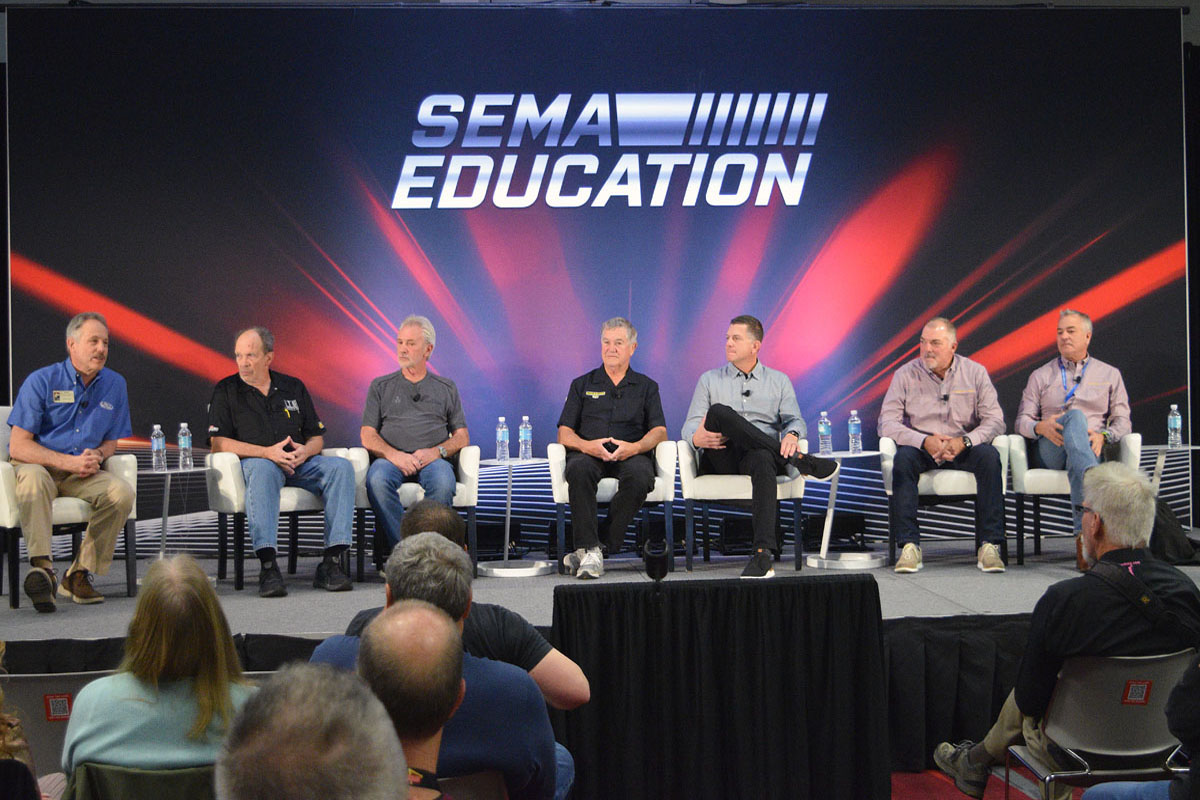
AT: I can also report that there will be some new and interesting thought leaders presenting SEMA Education sessions. We'll absolutely have more for attendees to experience there. We're also expanding several of our industry-community areas to spark more interaction and connections. Plus, as Tom mentioned, we'll see a greater presence of enthusiast end users in the Las Vegas Convention Center through the Show's Friday Experience.
SN: We've covered a lot in this interview. Do you have any closing thoughts you'd like to add?

TG: We're really keyed in on what industry attendees seek in an event. We're building new facets of the Show around those needs. So we're excited with what the future holds not only for our Show, but face-to-face trade events in general, and the value they bring. We feel strongly as a trade association that showcasing innovation, providing education and building an engaged community delivers attendees personal and professional development in a rapidly changing industry.


SEMA Week Expands in 2023

At last year's Industry Awards Banquet, SEMA introduced SEMA Fest, an enthusiast-focused experience that connects automotive enthusiasts with the aftermarket industry for a celebration of car culture and automotive lifestyle. The event will add a new dimension to SEMA Week.

Over a planned five-year rollout period and beyond, SEMA will remain dedicated to producing the annual SEMA Show—the specialty-equipment industry's premier automotive trade event—at the Las Vegas Convention Center. Open to the automotive trade, the Show takes place October 31–November 3.

For more information or to register, visit www.SEMAShow.com.

Not to be confused with the SEMA Show, SEMA Fest will be an enthusiast-
focused event open to everyone, including automotive enthusiasts and professionals. The two-day celebration will be held at a separate venue—the Las Vegas Festival Grounds—Friday and Saturday, November 3–4. It will feature music and entertainment, craft food, automotive celebrities, drifting competitions, freestyle motocross and the world's most innovative and advanced custom
vehicles.

To register for SEMA Fest or for more information, visit www.SEMAFest.com.


Advantages of Meeting Face-to-Face

The SEMA Show is driven by connections, and brings exhibitors, buyers and media from around the world together for the automotive aftermarket's most impactful business-to-business experience. Its in-person nature delivers key advantages that other forms of connecting simply can't match.


  • When you meet in person, you can read body language, see facial expressions, use context clues and better get to know someone's personality.
  • The automotive aftermarket prefers to meet face-to-face, without potential distractions or technical difficulties.
  • It's more effective to brainstorm, generate ideas and discuss what is working, and what is not, face-to-face.
  • Conducting business in person provides the opportunity to engage in purposeful small talk, deepening relationships, loyalty and trust.
  • Research from MIT's Human Dynamics Lab shows face-to-face requests are 34 times more effective than those sent by email, and that a physical handshake promotes cooperation and influences negotiation outcomes for the better.
  • According to a Forbes Insight study, 85% of people say they build stronger, more meaningful business relationships during in-person meetings and conferences.
  • According to a Harvard Review study, 95% of people say face-to-face meetings are a key factor in successfully building and maintaining long-term business relationships.


SEMA 60th Anniversary: Tracking The Growth of an Ever-Evolving Industry

SEMA 60th Anniversary: Tracking The Growth of an Ever-Evolving Industry


It all began in May 1963, at a meeting in the offices of a model-toy manufacturer in Hollywood, California, when 20-odd members of the fledgling automotive performance aftermarket—who were normally fierce competitors—first discussed the possibility of joining forces. From those inauspicious beginnings emerged the makings of a trade association that now serves more than 7,000 members comprising a $50 billion specialty-equipment market.

"The 60th anniversary of SEMA the organization is testimony to the strength and resiliency of our member companies," said Mike Spagnola, SEMA president and CEO. "Through changing and often turbulent times, the specialty-equipment market has continuously evolved to meet the demands of the moment. While SEMA has done its part to help advance the cause of the industry, it's the unflagging enthusiasm and perseverance of our members that has been the reason for our longevity."

What follows is a review of the past 60 years—the trends that influenced the aftermarket, and the ways that SEMA has changed to meet the needs of its member companies. Special thanks to all those industry members who shared their recollections with SEMA News for this article.


Before the Beginning: The Early Postwar Years

The automotive aftermarket as we know it today most likely began on the dry lake beds of California's Mojave Desert, where the earliest enthusiasts gathered for speed trials to test the products they'd produced for their (mostly) Ford and Chevy roadsters. In the early postwar years, those vehicles were plentiful and affordable, and Southern California's temperate weather enabled enthusiasts to wrench on (and race) their cars virtually year-round.

Things started to pick up for the industry when Robert Petersen launched Hot Rod in 1948, and the demand for speed equipment increased exponentially.

"What Hot Rod did was take a very regional Southern California phenomenon of building up cars to run on the lakes and extend that across the country," said Drew Hardin, longtime automotive journalist and author of Hot Rod Magazine: 75 Years. "Now people everywhere in the United States could read about what was going on in Southern California, and now people everywhere in the United States could find those parts that were being made by Vic Edelbrock and Barney Navarro and all the pioneer speed part manufacturers."

Also, Hot Rod provided enthusiasts around the United States an opportunity to interact with each other via the magazine. "Before then, the only way you could do that was to talk to friends, talk to fellow racers or go to speed shops," Hardin said. "Things were a little more catch-as-catch-can until Hot Rod came along." As a result, so-called "speed shops" began to spring up across the country to serve the growing demand of enthusiasts.

Another innovation that fueled further interest was the debut of Chevrolet's small-block V8 in 1955. "Much like what happened with Ford's overhead valve V8 in 1932, suddenly you had a V8 engine that was priced and marketed to the masses, and you also had one that was very receptive to modification," Hardin said. "Guys were hopping up that engine almost right out of the gate and making more power from it. It was a watershed moment."


››› George Barris

Also of note, Hardin continued, was Chrysler's introduction of the "FirePower" Hemi, which even pre-dated the Chevy small-block. "Those early Hemis were the backbone for drag racers for years."

While the aftermarket continued to grow into the '60s, there was little or no coordination between companies. Distribution networks didn't exist, and neither did industry product standards or much if any collaboration between manufacturers. These were, after all, competing entities that carefully guarded their trade secrets. "They were racers first and businessmen second," Hardin noted.

That all began to change in 1963.

The 1960's: How it Started

Accounts have varied over the years, but the surviving narrative, as originally reported in SEMA News in 1986 and again in 2003, is that SEMA was formed after a query from an outsider: Henry Blankfort, a marketing executive with model-car manufacturer Revell Inc. (now Revell USA LLC), who was seeking exclusive licensing agreements with various speed-equipment manufacturers to use their company logos on Revell's model cars.

To that end, Blankfort enlisted the aid of advertising executive Ed Elliot, who was well connected to the aftermarket—he represented most of the companies that advertised in Hot Rod—to convene a meeting of speed-shop owner/manufacturers in order to make his pitch. Some 20-odd manufacturers attended the meeting at Revell's headquarters on Hollywood Boulevard in May 1963, and among those known to have been in attendance were Ed Iskenderian of Isky Cams, Els Mohn of Eelco Manufacturing, Dean Moon of Moon Equipment and Roy Richter of Cragar Equipment.


››› Roy Richter

››› Dean Moon

››› Ed Iskenderian

Blankfort, who was also an officer with the Hobby Industry Association (HIA), a trade association of craft and hobby-equipment manufacturers, suggested the attendees form a similar umbrella group. The new association, he explained, could handle mundane administrative requests such as his more efficiently, and the new group could also be useful for government advocacy programs; a trade association could lobby more effectively against future regulations than any single company ever could. (The HIA was formed in part to lobby against legislative initiatives that sought to limit the sale of model airplane glue.) The idea took hold, and the attendees agreed to form an association.

Ed Iskenderian, 101 years of age at the time this issue went to press, recalled the meeting. "We especially liked the idea of having a lawyer in D.C. who could help us fight against any government regulations that might come along, so we agreed to join forces." John Bartlett, president of Grant Racing Pistons, drew up the first bylaws (he was also a licensed attorney), and the Speed Equipment Manufacturers Association was incorporated in May 1963, with Ed Iskenderian subsequently elected the association's first president. Iskenderian, who wasn't present for the vote, still isn't sure why he was selected, but adds that "it was really a great honor, though the fellow who really kept the organization running in the early years was Ed Elliot."

The new organization's mission was straightforward: develop uniform standards for products used in motorsports; promote the industry to consumers; develop business best practices among member companies; and hold regular meetings to promote solidarity as an organization. 


SEMA TIMELINE - 1960's

1963: The Speed Equipment Manufacturers Association (SEMA) is founded. Thirty-six companies join the new association by year's end.

1967: The first official SEMA Show takes place in January 1967 at Dodger Stadium in Los Angeles; 98 companies and 3,000 industry professionals attend.

1968: The SEMA Show relocates to the Anaheim Convention Center in Anaheim, California.

1969: SEMA membership surpasses 100 companies.

The SEMA Show: Origins

The idea for a specialty-equipment industry trade show sprang from a number of divergent sources, and several different aftermarket gatherings have been suggested as SEMA Show forerunners. Among the best-known was a trade event organized by the late Noel Carpenter, then the publisher of Speed & Custom Equipment News (which merged with Hot Rod in the '70s). It debuted at the Disneyland Hotel in 1965 as the "Speed & Custom Equipment Show" and featured 70-odd exhibitors and roughly 1,000 attendees. SEMA was not involved in organizing that event, but the association did sponsor the event the following year and received a share of show profits: a check for $535.

The first "officially recognized" SEMA Show was held in 1967 under the aegis of Petersen Publishing, which purchased the rights to the Show from SEMA. Petersen's Hot Rod Industry News, edited by Alex Xydias of SO-CAL Speed Shop fame, was the Show's official host, and Petersen's Special Events division, helmed by Dick Wells, was charged with the event's production and logistics.


››› Robert E. Petersen

››› Alex Xydias' shop

The inaugural SEMA Show—officially, the "High Performance & Custom Trade Show"—was held January 10–12, 1967, at the club-level concourse at Dodger Stadium. "It was raining and freezing cold," said Gigi Carleton, Bob Petersen's longtime executive secretary, in an interview with SEMA News in 2017. "The manufacturers came from all over the United States—some locally, some from as far away as the Midwest, and everyone stayed at the old Ambassador Hotel on Wilshire Boulevard.

"No one was sure how well a show like this would turn out," Carleton added, "because no one had ever done anything like it before."

As with any first-time exhibition, the initial SEMA Show had its share of challenges, with poor weather and slapdash booth displays that were sometimes little more than folding card tables and cardboard signs held together with Scotch tape. "It was kind of a mess," Ed Iskenderian admitted.

Still, with 98 exhibiting companies and some 3,000 industry professionals in attendance, the Show was judged to have been worth the effort, and worth revisiting the following year. "It was a huge success," Carleton said. "We couldn't believe it!" Many SEMA-member companies that exhibited that year are still in business today, including Air Lift Co., B&M Automotive, Crower Cams, Edelbrock Group, Hedman Hedders, Hellwig Products, Mickey Thompson Wheels & Tires, Milodon Engineering and Valley Head Service, among others.

Looking back, Carleton attributed the Show's success to a healthy economy and good timing. "Many of the exhibitors wrote so many orders at the first show that they could hardly wait for the second one," which was relocated the following year to the newly opened Anaheim Convention Center.

The 1970's: Regulations and Innovations

The year 1970 saw the passage of the Clean Air Act—and with it, the first enforceable federal emissions mandates. In addition, the publication of Ralph Nader's Unsafe at Any Speed a few years prior led to a public outcry for improved vehicle safety, and in the years that followed, the automotive industry was hit with a raft of new regulations, including a federal speed limit.

In response, SEMA's name was changed to its present form in 1970 at the suggestion of Earl Kitner, SEMA's first Washington, D.C.-based attorney, for reasons that were as much political as organizational. "A name change would greatly assist our representation," Kitner said at the time, adding that "elderly bureaucrats are not likely to appreciate the swinging generation's preoccupation with speed." The aftermarket had begun to diversify beyond hard parts for racing, and the members agreed that the more generalized "Specialty Equipment" better reflected an industry that was now serving multiple automotive market segments while de-emphasizing the go-fast enthusiast element.


››› Don Smith, former SEMA Board member (right).

"We also wanted to attract distributors," Ed Iskenderian added.

Still, the '70s witnessed the first of many skirmishes between SEMA-member companies and the new wave of environmental regulations from the newly created U.S. Environmental Protection Agency (EPA) and the California Air Resources Board (CARB). In response, SEMA's legal department rose to meet the challenge.

"One of the secrets of our success was keeping the EPA and CARB at arm's length," said Chuck Blum, SEMA president and CEO from 1980 to 2002. "Their regulations basically wouldn't allow you to touch any emission-control devices on a car. If you did, you violated the regulation even if the aftermarket guys were making products that didn't violate emissions. But the way the law was written, they couldn't make those products and sell them. They wanted to shut down the aftermarket.

"But that's where SEMA played a major role in that," Blum continued. "We sued the EPA, and we won."

On the other hand, Blum reminded, "A lot of the same laws are still on the books to this day. And SEMA is still fighting those same regulations."

In any event, the aftermarket experienced robust growth during the decade, and it was reflected in the rapid expansion of the SEMA Show, which had outgrown its Anaheim exhibition space by the middle of the decade. Would-be industry attendees were turned away from sold-out events in 1975 and 1976, and in response, the SEMA Board of Directors, following the guidance of CEO Leo Kagan, made the decision to relocate the Show to the city of Las Vegas. Only a decade after the initial SEMA Show, which hosted fewer than 100 exhibitors, the inaugural Vegas event hosted more than 800 companies.


SEMA TIMELINE - 1970's

1970: SEMA changes its name to the Specialty Equipment Market Association.

1971: SEMA membership surpasses 500 companies.

1977: The SEMA Show moves to the Las Vegas Convention Center.

1977: SEMA membership surpasses 1,000 companies.

The 1980's: The Aftermarket Diversifies

A succession of Middle East oil embargoes in the '70s, combined with years of near double-digit inflation, kept fuel prices high for the better part of the decade. As a consequence, consumer preferences began to shift away from full-size domestic sedans toward smaller imports, and by the mid-'80s, Honda Civics and Toyota Corollas were commonplace on America's roads. These cars were highly economical but lacking in the kind of power and performance many consumers desired. The specialty-equipment market responded in kind, and a "sport compact" aftermarket sector began producing parts for Japanese and German imports.

"We ran across this guy, Chuck Schwartz, who had his own little import show called Auto Internacional, and we negotiated with him to bring the import show into our group," Chuck Blum said. "And in so doing, we ended up hiring him as our show manager. It was basically the import parts segment of the industry, which at that time was pretty unique."


››› Chuck Schwartz

››› Chuck Blum

In addition, the pickup enthusiast market grew by leaps and bounds in the '80s, particularly in response to the unexpected popularity of monster truck racing that began in the middle of the decade. Initially derided as a passing fad, the monsters caught the fancy of the American public, and eventually the industry became a leading innovator in chassis and suspension design. Once again, the aftermarket rushed to fill a growing enthusiast demand with suspension lifts, oversized tires and numerous related components for trucks, Jeeps and SUVs.

Chuck Schwartz was also instrumental in the expansion of the truck and off-road sector, forming the Off-Road Equipment Association (OREA) along with Pete Condos, Bill Stroppe and Thurston Warn, among others, as a response to concerns about land closures. Schwartz produced the OREA trade shows, which eventually was folded into the SEMA Show.

As the aftermarket grew into greater numbers of segments, the annual SEMA Show, which had no systematized exhibit protocols, became an increasingly taxing experience for attendees.

"A lot of the attendees were complaining that if they wanted to, say, see truck accessories, they had to walk all over the place to find them," Blum recalled. "The show was getting bigger and the convention center was getting bigger, and it became very difficult. So we decided we'd go with dedicated Show sections."

It may be hard to believe in retrospect, but "we got a lot of pushback at the start," Blum said. "We had exhibitors complaining, 'I don't want to be anywhere near my competitors,' that type of thing. But as it turned out, even those naysayers agreed that it was probably the best thing to do."


SEMA TIMELINE - 1980's

1984: SEMA Scholarship Council is formed.

1988: SEMA Show sections originate; exhibitors within the street-rod market are grouped in a "Street Rod Equipment" area.

The 1990's: Street Performance and SUV's

The '90s marked the post-Cold-War Era, the decade when America saw the fall of the Iron Curtain and the launch of the internet (then spelled with a capital "I"). The "peace dividend" expanded the economy, and hence new aftermarket opportunities. There are some, in fact, who argue that the decade was among the most exciting periods in automotive history.

"For the aftermarket, adding a body kit or spoiler was popular, wheels got bigger and spinners enjoyed renewed popularity, among many other innovations," noted Stuart Gosswein, former SEMA senior director for federal governmental affairs. "On the safety side, the National Highway Traffic Safety Administration [NHTSA] introduced the five-star rating system in 1993 to help consumers focus on issues such as front, rear and side impact. Anti-lock brakes became standard equipment, and cars were required to have front passenger-side airbags."

Meanwhile, the introduction of the Ferrari F50 and Lamborghini Diablo took sports performance and handling to new levels. (For more modest budgets, there was the "Ferrari-slaying" Acura NSX or the V10 Dodge Viper.) Especially noteworthy, GM introduced the LS engine in 1997 with the C5 Corvette.

For the trendy, the Plymouth Prowler and a revamped VW Beetle brought the market a retro vibe. But the Hip Hop Age continued the proliferation of "tricked out" lowriders and mini trucks begun in the '80s, while the sport-compact scene redefined street performance.

"That market gave a giant shot in the arm to SEMA and the industry because it brought in a much younger crowd," observed former SEMA News Editor Bill Groak. "They were doing the same thing that SEMA folks did back in the '50s and '60s—improving horsepower and suspensions and adding cool goodies."

The rise of the SUV was another gift to modifiers, given how consumers liked their vehicles rugged-looking, bull-bar-equipped and ready to go off-road on a moment's notice—whether or not they ever really did.

But there were rising challenges. In 1991, CARB mandated OBD II for all new cars, with the EPA quickly following suit. Foreseeing growing regulatory battles, SEMA relocated its Government Affairs office to Washington, D.C., in 1995 and held its first Washington Rally to connect members and lawmakers in 1996. "SEMA also sponsored the formation of the Congressional Automotive Performance and Motorsports Caucus to help raise the industry's profile with Capitol Hill and the public," added Gosswein.

SEMA TIMELINE - 1990's

1992: SEMA joins other specialty-equipment organizations to create Automotive Aftermarket Industry Week (AAIW), occurring annually the first week of November in Las Vegas.

1993: ARMO, SBN, SRMA (later HRIA), AARM (PRO) and YEN (FLN) councils are formed.

1994: SEMA membership surpasses 2,000 companies.

1995: MPMC council is formed.

1996: MRC (MRN) is formed.

1997: The TIA International Tire Expo and the SEMA Show merge to create Global Tire Expo.

1998: WIC (WTC) council is formed.

1999: TCAA (TORA) council is formed.

The 2000's - "Fast and Furious" Car Culture

As the 21st Century dawned, the aftermarket experienced "Fast and Furious" growth—literally. Released in 2001, the film arguably influenced the aftermarket more than any other in recent memory. In fact, Hollywood seemed intent on promoting fast and blingy cars. (Think MTV's "Cribs," "Pimp My Ride," big chrome wheels and spinners.)

The mix of urban culture, stars and cars opened a fresh niche for publications, including DUB magazine, which helped inspire toy car lines, video games and concerts. This and other car-oriented phenomena greatly broadened the audience for all things automotive.

"Suddenly cars were cool among the youth again," observed SEMA Vice President of Marketing RJ de Vera, who came of age amid the craze. "It was a lifestyle movement as much as a car movement."

That movement encompassed car shows and concerts, Hot Import Nights and other motorsports events delivering DJs and live music, dancing, big-name sponsors, and other festival elements to young attendees. Formula Drift became a sanctioned form of motorsports, while off-road and dirt racing also greatly expanded, garnering major media coverage and non-endemic sponsorships. And, though few foresaw it then, Yamaha's 2004 introduction of the Rhino would hatch an exciting new UTV powersports class.

Among the OEMs, SUVs continued in popularity, with Jeeps surging in ascendancy by mid-decade. The Chrysler PT Cruiser caused a stir, as did the Chevy Corvette Z06 and Ford GT. The truck wars between Ford, GMC/Chevrolet, Dodge and Toyota heated up as well. By end of decade, however, rising gas prices had many consumers considering recently introduced subcompacts and hybrids like the Honda Fit and Insight and the Toyota Prius.

Tech-wise, the TREAD Act of 2000 required the NHTSA to issue a new tire safety standard and mandates for tire-pressure monitoring and electronic stability control systems on new cars. OEMs also introduced dual-clutch transmissions, backup radar and rearview cameras. "Infotainment," too, became an aftermarket buzzword: this encompassed DVD players, enhanced audio and GPS navigation systems, Bluetooth, iPods and charging units for early smartphones. (Remember the Blackberry?)

On the legal front, SEMA fought "Cash for Clunker" initiatives throughout the '00s at state and federal levels. To further expand industry influence, SEMA created the Political Action Committee (SEMA PAC) in 2003 and the State Automotive Enthusiast Leadership Caucus in 2005. "Both organizations remain vital to supporting federal and state lawmakers who support the automotive hobby and businesses," explained Stuart Gosswein.


2010–Present: Reaching New Heights

If you could sum up the last 13 years in two words, they might be "growth" and "technology." Plunged into the Great Recession in 2008, the economy righted itself around 2010, and the industry roared back.

By 2015, what former SEMA President and CEO Chris Kersting called "the Golden Era of Off-the-Shelf Horsepower" was in full swing with musclecars gaining a fresh following. In fact, the OEM push for ever-higher fuel efficiency and performance through turbo- and supercharged engines has delivered consumers vehicles capable of 700+ hp. Smaller-displacement engines have benefitted too. The horsepower of an average four-cylinder is double—sometimes triple—that of 2010.

Aftermarket upgrades have become "simpler" also: a new intake, exhaust kit, springs and electronic tuning. What isn't so simple is the emissions compliance surrounding certain mods. Both CARB the EPA stepped up emissions enforcement in the '00s, prompting SEMA to open the Diamond Bar, California, SEMA Garage in 2015 to assist manufacturers in developing compliant products. In 2022, SEMA added a Detroit facility.

SEMA also stepped up its industry advocacy, introducing the RPM Act and mobilizing enthusiast supporters, lobbying state legislatures for more favorable laws, and increasingly taking on land-use issues. It worked to save the Bonneville Salt Flats and recently joined a lawsuit to keep California's Oceano Dunes open to OHV recreation.

"Member challenges and opportunities abounded in the '10s," said Kersting. "We prioritized the use of SEMA funds on solutions and tools that they couldn't develop or afford individually. These included the Diamond Bar and Detroit SEMA Garage emissions and ADAS centers, SEMA Data services, and growing the SEMA Show into an all-encompassing automotive cultural event." (This helped lay the groundwork for SEMA Fest.)

It's no understatement to say the current decade is one of major industry transformation. OEMS are shifting toward trucks, mainly pickups and CUVs. Plus, all automakers plan to significantly up hybrid and battery electric vehicle production in the coming decade. (Autonomous cars are further off, but techies are working on it.)

In terms of aftermarket styling, more nuanced kits with vinyl wraps and carbon-fiber pieces are the latest vogue. The truck surge has also kept lift, suspension, wheel and bumper suppliers busy. Meanwhile, restorers are redefining "classics" to include restomodded '80s and '90s cars and trucks.

Even when the 2020 pandemic hit, the industry kept its momentum, aided by the tech that has radically reshaped marketing. In 2006, Twitter was a fledging and Facebook a "fad." Now digital media drives consumer engagement. Time and again, the industry demonstrates ingenuity and resilience, and SEMA and its members stand well poised for the future.

SEMA TIMELINE - 2000's

2002: The Las Vegas Convention Center expands an additional 1 million sq. ft. with the opening of South Hall.

2002: SCC (ETTN) council is formed.

2003: A vehicle Proving Ground is added to the SEMA Show where attendees experience exhibitors' products in action for the first time.

2003: SEMA membership surpasses 5,000 companies.

2006: SEMA holds its 10th Annual Washington Rally.


The Mystery of the SEMA Time Capsule


››› Mario Andretti (right) with former SEMA Chairman Ron Coleman.

Upon entering the SEMA Garage lobby in Diamond Bar, California, visitors often spy a strange, 7-ft. cylindrical relic ensconced in a museum-like display case. That display case is no accident, because the object in question was indeed once meant for a museum. So begins the unusual history of the SEMA Time Capsule.

Designed by Chip Foose and built by Boyd Coddington Hot Rod Shop in 1996 to commemorate the first "100 Years of the Automobile in America," the tube contains a variety of artifacts contributed by SEMA members (and even racer Mario Andretti). But just what all those artifacts are will likely remain a mystery until 2096, the tube's intended opening date.

According to a memo dated June 6, 1996, by GiGi Carleton, secretary to famed automotive publisher Robert E. Petersen, SEMA offered the capsule to the Smithsonian Institute, but the Smithsonian people passed on it. That's when Petersen, who was founding the $40-million Petersen Automotive Museum in Los Angeles, took interest in the capsule.

"Presently the capsule is scheduled to go on tour for the rest of the year," Carleton explained to Petersen in her memo. "During the month of July it is to be displayed at the Henry Ford Museum [in Detroit]. Then to a museum in Philadelphia and will also be on display at the NHRA Nationals in Indianapolis over the Labor Day Weekend."

After the tour, the Henry Ford Museum planned to inter the capsule for the next 100 years under a floor "with a very thick armored glass over it so the museum goers can inspect it and possibly walk over it," wrote Carleton. The estimated cost for such an arrangement was approximately $5,000—cheap by today's architectural standards.

Carleton's question for Petersen: Did he want to offer a similar subterra display at his museum instead? The estimated cost was "nothing," since the project could be folded into the construction then underway. Moreover, an NBC "Today Show" interview with the publishing scion about the museum was in the works, presenting an ideal PR opportunity.

"A decision must be made immediately since it will be announced on the 'TODAY' show the end of June, the same show on which you will have your interview clips," Carleton pointed out.

Alas, permanent entombment at any of the proposed museums was not to be. After a brief stint as an above-ground display in the Petersen Museum, the capsule wound up back at SEMA's SoCal headquarters. There its secrets await their unsealing some 73 years from now.


SEMA TIMELINE - 2010 to PRESENT

2012: SEMA launches the SEMA Data Co-op (now SEMA Data) for the management and sharing of industry product data.

2012: SEMA acquires Performance Racing Industry (PRI); its 2013 show returns to Indianapolis.

2013: The SEMA Launch Pad competition debuts.

2014: SEMA Garage opens in Diamond Bar, California, with facilities for emissions testing, CARB certification, measuring sessions and more.

2014: SEMA Ignited is introduced.

2014: The Battle of the Builders competition debuts.

2019: SEMA Electrified, a new emerging-tech SEMA Show feature, debuts.

2019: SEMA membership reaches a record 7,703 companies.

2021: The Las Vegas Convention Center expands by 600,000 sq. ft. with the opening of West Hall.

2021: The Boring Co. launches its underground shuttle service between West Hall and South Hall.

2021: SEMA Individual Memberships are offered for the first time.

2022: SEMA Garage Detroit opens a 45,000-sq.-ft. facility, which includes 5,000 sq. ft. dedicated to ADAS testing and calibration.

2022: The SEMA Show New Products Showcase expands to include sections dedicated to the latest EV and ADAS products.


SEMA Founding and Charter Member Companies

Company/Owner - * denotes founding companies

American Racing Equipment Jim Ellison

Ansen Automotive Engineering* Louis Senter

B&M Automotive Products* Bob Spar

CAE Racing Products Jim Culbertson

Chuchua's 4-Wheel Drive Brian Chuchua

Cragar Equipment* Roy Richter

Crankshaft Co. Huey Holik

Dempsey Wilson Racing Cams* Dempsey Wilson

Edelbrock Equipment Co. Vic Edelbrock

Ed Iskenderian Racing Cams* Ed Iskenderian

Eelco Manufacturing & Supply* Els Lohn

Enginetics Ruth Wilson

Grant Industries* John Bartlett

Halibrand Engineering Ted Halibrand

Henry Blankfort Group Henry Blankfort

Hedman Manufacturing Co. Bob Hedman

Hurst-Campbell Inc. George Hurst

Inglewood Tire Co. Bill Krech

Offenhauser Sales Fred Offenhauser

J.E. Engineering Bill Pendleton

Milodon Engineering* Don Alderson

Moon Equipment Co.* Dean Moon

Potvin Equipment Chuck Potvin

Schiefer Manufacturing Co.* Paul Schiefer

Scott Engineering N/A

Segal Automotive Al Segal

Shelby American Carroll Shelby

Spalding Products Tom Spalding

Speed-A-Motive Harold Osborne

Thomas Automotive Products Bill Thomas

Traction Master Co. Maury Leventhal

Trans-Dapt* Willie Garner

W&H Engineering Bob Wyman

Weber Speed Equipment* Harry Weber

Weiand Power & Racing* Phil Weiand

The 2022 SEMA Show

The 2022 SEMA Show


A Milestone Trade Event Revs Up Industry Momentum in Vegas

By Mike Imlay


Did you feel the energy? A juggernaut hit Las Vegas this past November 2022 when the annual SEMA Show roared back into the city’s convention center. And it was clear the specialty-automotive industry was ready for business. 

Reflecting a rapidly changing aftermarket, the Show greatly revamped its education, networking and event programs. There were also new exhibitions, features, vehicle displays, and plenty of interactive thrills seen, felt and shared throughout the 1-million sq. ft. trade event—not to mention thousands of new products for attendees to discover. Plus, there was an exciting announcement of new things to come, with SEMA undertaking a citywide expansion of the Show, beginning November 2023.

“SEMA wishes extend a huge thanks to our 2022 Show exhibitors, attendees, sponsors and partners for making the event such an outstanding success,” said SEMA President and CEO Mike Spagnola. “Across the board, participation far exceeded expectations, and the industry’s support and energy were everywhere to be seen. This Show will be remembered as among the best our association has ever produced, and demonstrates again why the SEMA Show remains the world’s number-one automotive trade event.”


After its successful return as a live event in 2021, the 2022 Show proved beyond a doubt that the specialty automotive industry is revved up and leaving the pandemic behind. Nearly 3,000 exhibitors and approximately 130,000 attendees flooded the 2022 Show halls, representing 30% growth over 2021.

“Trade events like the SEMA Show are meant to both highlight and energize industry trends and innovation, and throughout the Show it was evident that SEMA-member companies are ready to seize the future,” said SEMA Vice President of Events Tom Gattuso. “It’s no exaggeration to say the 2022 Show was a historic milestone. From the moment you arrived at the Las Vegas Convention Center, you could feel the energy and momentum.”

“The 2022 event was very forward-focused,” added Gattuso. “We increased the size and scope of our SEMA Electrified section and added the new SEMA ADAS Showcase to demonstrate recalibration of modified vehicles for compliance with advanced driver-assistance systems, and attendee interest in both was notably high.”


“Also, there were more equipment manufacturers and electric-vehicle [EV] conversion companies for attendees to connect with as well as live demonstrations of products and procedures. We additionally expanded our educational seminars addressing vehicle electrification and other emerging technologies, and the many new opportunities they’re providing our industry businesses.”

Other key features included the popular SEMA Overland Experience, the Chip Foose Experience, and an eBay Motors Experience featuring the Hoonigan Burnyard, drift ride-alongs and a stunning collection of unique vehicles. An expanded OPTIMA Village played host to Ultimate Street Car Invitational events, numerous demos and celebrity appearances, and lots of tire smoke.

Moreover, the Show exuded industry diversity in every sense of the word. There were bed-dancing mini trucks, truck drifting, and lowrider hopping, courtesy TIS Off-Road and urban-car-scene veteran Myles Kovacs. Donk vehicles stood proudly alongside the traditional performance and street racers, trucks and off-road vehicles, hot rods and classic show cars. The Motorcycle Industry Council “Ride With Us” activation feature even taught new enthusiasts how to ride.


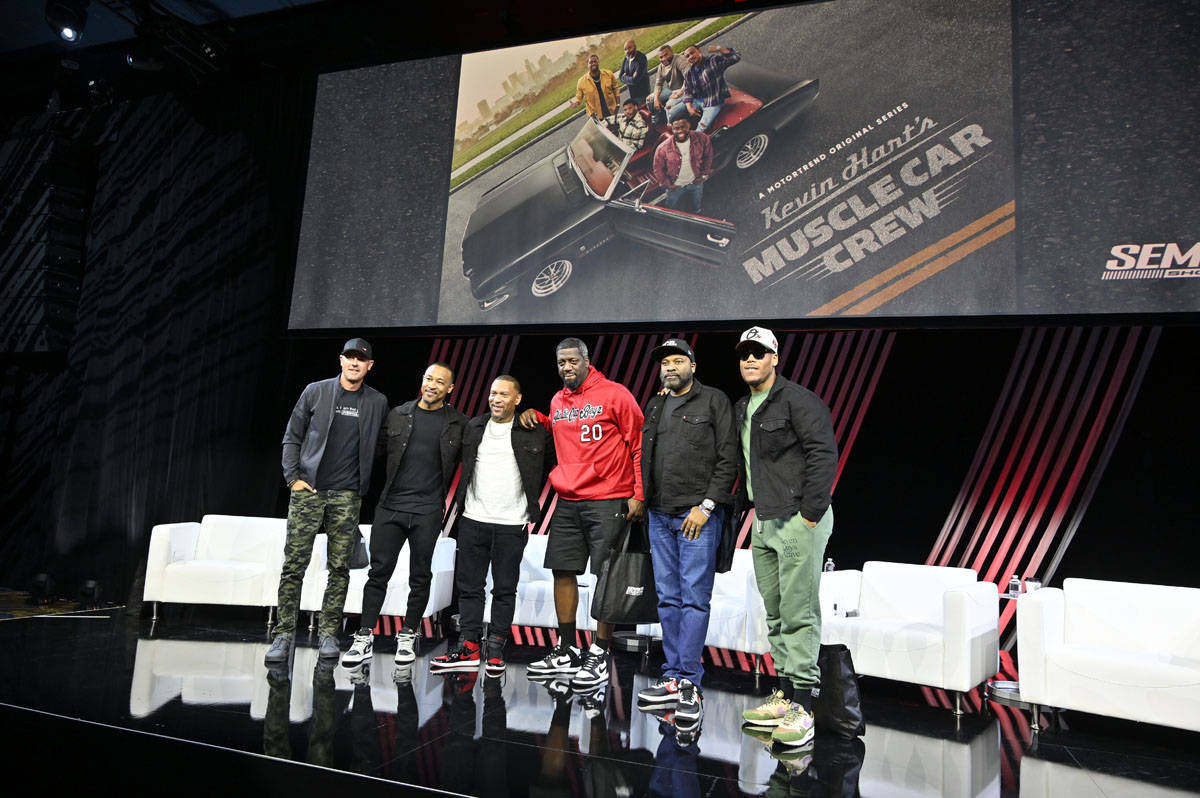
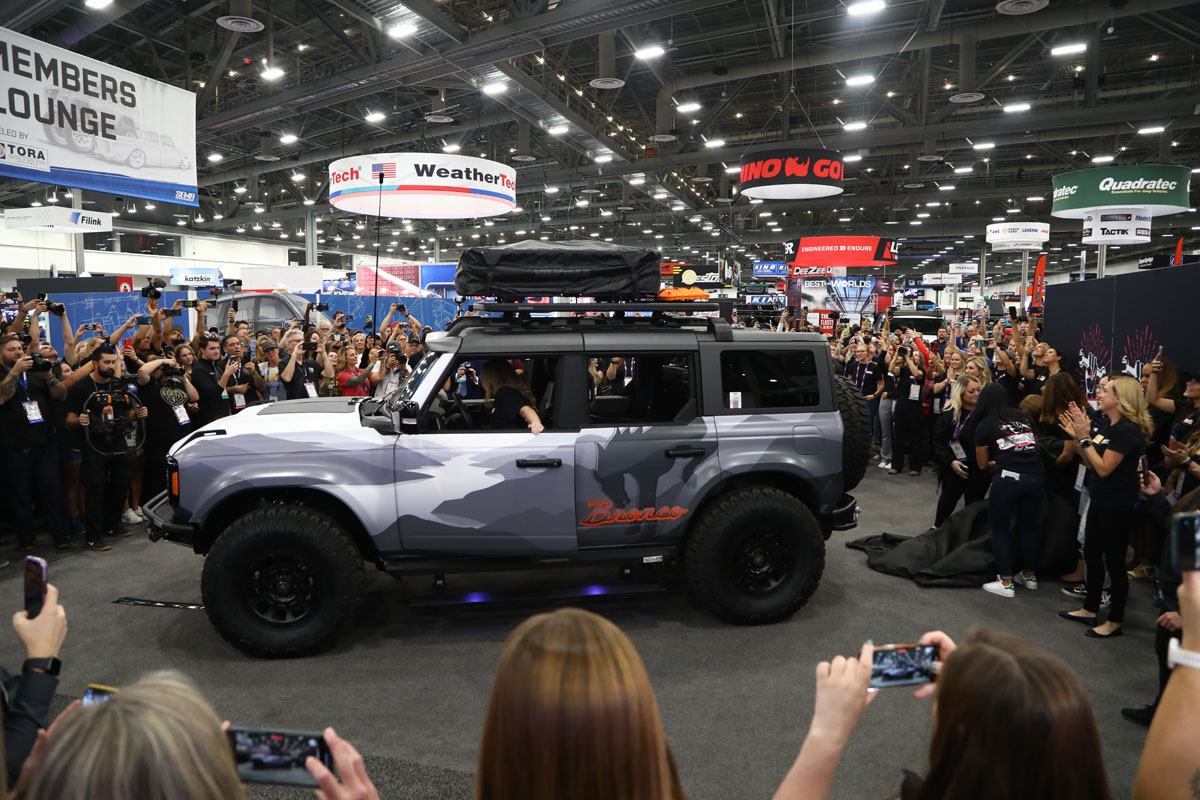
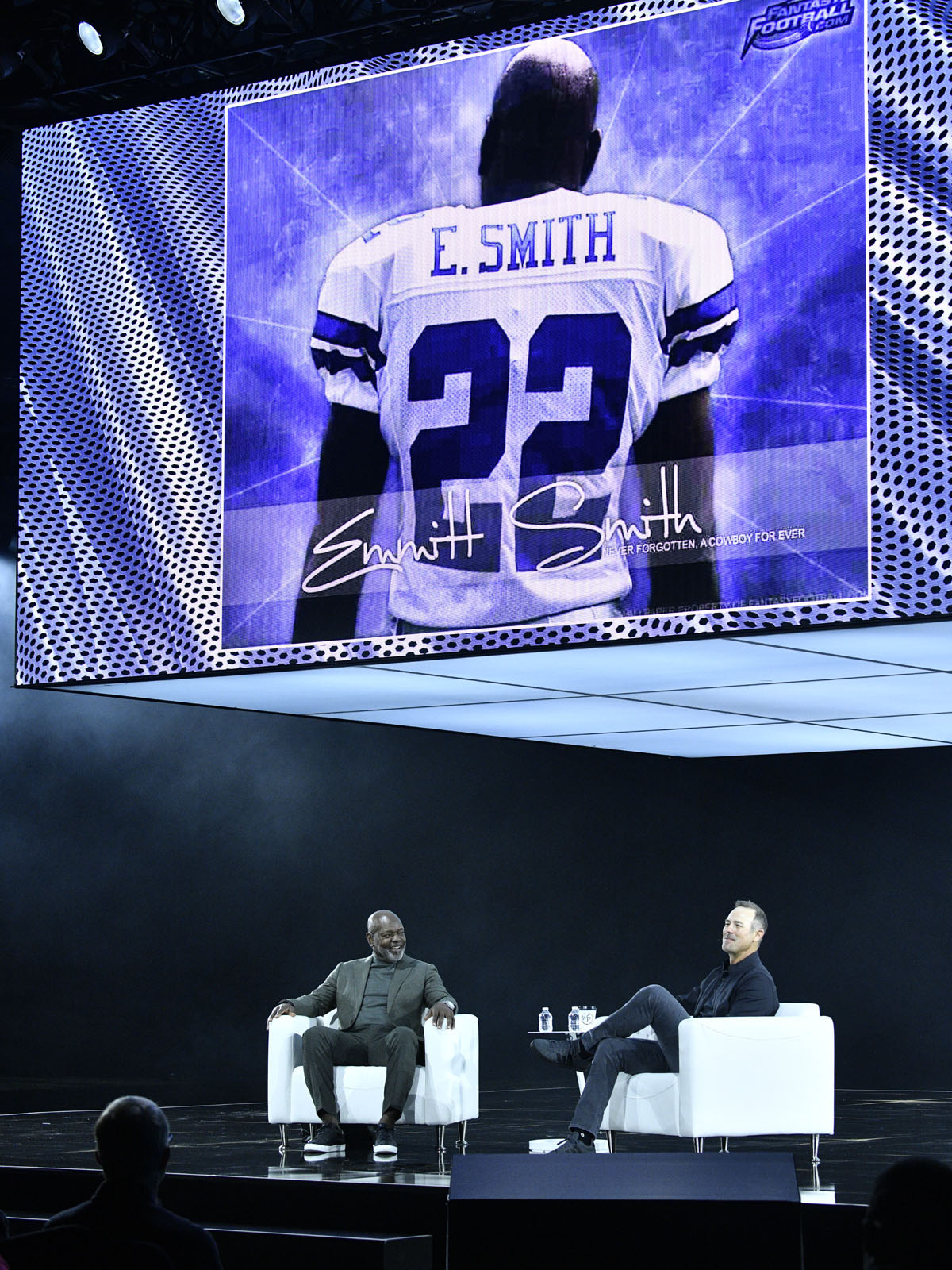
Meanwhile, the Show’s “Still I Race” exhibition paid tribute to African American Racing Association legends, and a SEMA Businesswomen’s Network (SBN) Ford Bronco Wildtrak showcased the growing contributions of female builders. Headline celebrities further appealed to a broad range of interests. They included keynote appearances by football great and now NASCAR team owner Emmitt Smith, NHRA champion Anton Brown, and Kevin Hart’s Muscle Car Crew, among others.

The annual Monday-night Exhibitor Appreciation Party featuring the SEMA Awards, the Tuesday-morning Kickoff Breakfast, and the Thursday-evening Industry Awards Banquet all saw updated formats. Likewise, rules changes to the SEMA Battle of the Builders and Launch Pad competitions broadened their appeal, and the Show’s Friday Experience for qualified consumer attendees was expanded. Open to the public, the annual SEMA Cruise and SEMA Ignited after-party further amped public enthusiasm for car culture.

Ultimately, words can’t capture the scope and excitement of the 2022 SEMA Show. But you can get a feel for it all in the following 15-page photo essay. And make your plans now: SEMA Week 2023 promises an even greater impact starting this November.  


HEADLINED BY THE 2023 SEMA SHOW, “SEMA WEEK” WILL KICK OFF THIS NOVEMBER

HEADLINED BY THE 2023 SEMA SHOW, “SEMA WEEK” WILL KICK OFF THIS NOVEMBER


By SEMA News Editors


SEMA has announced an ambitious five-year initiative to expand the annual SEMA Show’s reach in Las Vegas. Officially dubbed SEMA Week, the goal is to create the world’s most expansive and exciting automotive event for industry and enthusiasts alike.


Among the highlights of the 2022 SEMA Industry Awards Banquet, was the announcement of a bold five-year vision to expand the SEMA Show into a broader Las Vegas experience. Officially called SEMA Week, the plan seeks to develop the world’s most passionate and exciting automotive event for both industry businesses and vehicle enthusiasts. SEMA Week will kick off this November 2023 with multiple new concepts, activities and events continuing to be phased in over the five-year roll-out period. 

The business-to-business SEMA Show will continue to anchor SEMA Week, with the Show remaining a trade-only event Tuesday through Thursday. On Friday, the final day of the SEMA Show, a greater number of qualified enthusiasts will gain exclusive access to the Show through the Friday Experience program, which was launched two years ago. The SEMA Cruise and SEMA Experience—which draw thousands of fans on Friday—will also remain in place. . 

The big change will begin Friday evening of SEMA Week, when the association will take over the nearby Las Vegas Festival Grounds to debut an all-new SEMA Fest event. Open to the entire public, the festival will continue through Saturday night.

“We have been watching the connection between enthusiasts and our industry grow for more than a decade and, as the industry’s trade association, have a responsibility to help facilitate that connection in new and meaningful ways,” said James Lawrence, SEMA Chairman of the Board. “By creating SEMA Week and SEMA Fest, we will be able to maintain the integrity of the trade show that makes it a must-attend event for automotive professionals while introducing a new platform for enthusiasts and the industry to engage with one another.” 

Although SEMA Week will mark a major turning point for the association, SEMA President and CEO Mike Spagnola noted it follows a progression of recent SEMA outreaches to the enthusiast market. “In 2007, we brought the television show “Overhaulin’” to the SEMA Show. In 2011, the SEMA Cruise was launched. In 2014, we introduced SEMA Ignited and the SEMA Battle of the Builders. And [in 2021], the Friday Experience brought 5,000 automotive consumers to be part of the SEMA Show,” he said.

According to SEMA Vice President of Events Tom Gattuso, SEMA Week’s SEMA Fest will unite automotive enthusiasts with the aftermarket industry “in a high-octane and immersive festival-like celebration of car culture.” The event will feature top music and entertainment, a car show and cruise, VIP experiences, craft food, automotive celebrities and motorsport events. 

Some may wonder why a trade association like SEMA, best known for its industry-only Show, is now making such a sizable commitment to the consumer space as well. In announcing SEMA Week, Lawrence explained it is part of a broader initiative to capture the hearts and imaginations of the enthusiast public and galvanize consumers behind the industry. A trade association has only so many business voices it can make heard. But a trade association supported by millions of consumers who use and enjoy its products speaks volumes to governmental policymakers at a time when the right to enjoy and modify vehicles is under threat.

“We as an association need to step out of the background, step up to the podium, and take a bigger charge in leading this. Politically, SEMA needs to be bolder and act more decisively, with more conviction,” he said.


lthough SEMA Week will be open to the general public at the Las Vegas Festival Grounds, the flagship SEMA Show at the Las Vegas Convention Center will continue as the industry’s premier trade-only event Tuesday through Thursday of SEMA Week.


The SEMA Week concept also aligns with a trend reshaping the trade-show industry at large. “This is a natural evolution of the many live activations and performance demonstrations we’ve been creating for years now,” said Gattuso. “We’re going to leverage a decade of planning and events into what the trade-show industry has labeled ‘festivalization.’ The great thing about creating a festival-type experience is it turns enthusiasts into evangelists. It can also turn car-curious people into enthusiasts.” 

“During the pandemic our industry’s pathway from manufacturers or service providers to end-user enthusiasts became more direct than ever,” added Gattuso. “With SEMA Week we’re building on that connectivity to help the end-user understand our industry’s latest trends, innovations and products and speed up the timeframe to consumer adoption.”

SEMA Week will also include a SEMA Auction featuring some of the best builds from the Show, plus many more amazing vehicles to headline the festivities. As an association, SEMA will continue to expand and refine SEMA Week, adding new events and activities throughout the city of Las Vegas each year. The city is fast becoming a hub for car culture, Gattuso observed, and SEMA plans to fuel and build on that phenomenon. 

“Our commitment to growing and maintaining our industry’s B2B connections hasn’t changed,” emphasized Gattuso. “SEMA Week adds a new opportunity to deliver our core industry audience the best automotive event that they’ve ever been to while introducing a whole new realm of people into what our industry does.” 

Perhaps SEMA Chairman James Lawrence best summed up SEMA Week’s potential during his Industry Awards Banquet announcement: “It’s going to be everything you love about SEMA, and so much more,” he said. “We believe, within a few years, it’s going to make SEMA Week the can’t-miss automotive event in the world.”

In coming months, additional details regarding the 2023 SEMA Show, SEMA Week, and SEMA Fest will be announced through multiple SEMA communications channels, including the SEMA News magazine, SEMA News digital, and social media. 


THE 2022 SEMA NEW VEHICLE AWARDS

THE 2022 SEMA NEW VEHICLE AWARDS


Recognizing the Most Customizable New Platforms For The Coming Year

Compiled by SEMA News Staff

Each year prior to the SEMA Show, exhibitors are polled on the new vehicles that, in their judgment, represent the best opportunities for accessorization via the aftermarket for the coming year. Vehicles are chosen in six distinct classes—including a brand-new class for 2022, EV of the Year—and the winners are announced ahead of the start of the Show. This year’s announcement was made on Monday, October 31, on the eve of the 2022 Show. The winners are listed at right.

“The SEMA Award recognizes the hottest new vehicles on the market that offer the greatest opportunities for customization,” said Warren Kosikov, SEMA vice president of sales. “SEMA Award-winning vehicles are setting worldwide trends in the automotive enthusiast industry. The 2022 SEMA Show had on display many of the SEMA Award-
winning vehicles, each customized in its 
unique way.”
What follows on these pages is a sampling of the winning vehicles that exhibited at the 2022 SEMA Show.


Car of The Year: Dodge Challenger
 

On its farewell tour, the “Last Call” Dodge Challenger—and its stablemate Charger—made a splash appearance at the 2022 SEMA Show in ScatPack “Swinger” trim, recalling the musclecar’s glory years of the late ’60s through the early ’70s. The limited-edition (1,000 units only) Challenger gets its own unique grille badging, painted Shaker intake, spoiler and “345” fender badges, 20x11 Gold School wheels with black six-piston Brembo brakes, Mod Grain interior with aluminum bezel textures, Nappa/Alcantara seating with green stitching and green Dodge Rhombi logo, retro Swinger rear fender graphics, and Sublime Green exterior paint.


Fullsize Truck of The Year: Ram


The SEMA Fullsize Truck of the Year, RAM made multiple appearances the at the 2022 Show, including the TRX Gold Shot concept seen here. Designed for backcountry adventure, this Mopar-built, 700hp TRX rides on a set of 37-in. BFGoodrich tires mounted to 18x9.5 Black Rhino Camber wheels. Custom-etched skid plates are said to improve approach angle, and a set of Mopar rock rails provides additional armor proofing. A retractable bed step enhances bed access, and the Ram-Bar behind the cab holds a pair of TYRI concept lights. Inside, black Capri leather seats with Alcantara suede inner bolsters are accented by gold stitching, and vinyl flooring taken from a 1500 Tradesman makes cleanup easier after a day in the dirt.


Midsize Truck of The Year: Jeep Gladiator


The SEMA Midsize Truck of the Year, the Jeep Gladiator has made a splash in the overlanding space that was once the province of midsize Toyotas, and this Rubicon model located in the Overland Experience exhibit has many fine attributes. An Armadillo 23Zero aluminum hard-shell tent features polyurethane coating to keep inside occupants cool on hot summer days. ARB bumpers provide stoutness and strength, a Warn Zeon 10S 10,000lb. winch aids with extractions, and the Factor 55 Ultrahook stores up against the fairlead for added safety. Rolling stock comprises a set of Nitto tires on black beadlocked rims.


Sport Utility of The Year: Jeep Wrangler
 

Among the most commonly seen vehicles at the 2022 SEMA Show, the Wrangler JL has been a hit with consumers and enthusiasts alike since its introduction in 2017, and this Magneto 2.0 concept Wrangler points a possible way to the future of the brand. All electric, the Magneto 2.0 uses 800-volt battery packs to power a custom axial flux electric motor which is said to produce an estimated 625 hp, 850 lb.-ft. of torque, and a 0–60 time of only 2.0 sec. To accommodate the electric drive system, Jeep stretched the wheelbase 12 in. The six-speed transmission was retained, as was the Rock-Trac transfer case, but beefier Dynatrac axles—a lockered 
60 Pro-Rock in front and a lockered Pro-Rock 80 rear—help handle the higher torque loads. A 3-in. lift clears rooms for a set of 40-in. tires.


Sport Compact of The Year: Toyota GR86

The SEMA award-winning Sport Compact Car, the GR86 has been an instant hit in multiple racing circuits, as this “Daily Drifter” proves. Built by SEMA 2022 Influencer of the Year Larry Chen, the Toyota utilizes an HKS GT2 Supercharger Pro ZD8 kit and a MagnaFlow NEO Series cat-back performance exhaust to produce some 300 hp. Power flows from a six-speed manual to an OS Giken Super Lock 1.5-way differential, and a StopTech Big Brake kit brings the ride to a halt. The drifter rides on an ST XTA Plus 3 coilover suspension that incorporates SPL Parts adjustable control arms, adjustable sway bar links, and a GK Tech steering angle kit. Inside, a Sparco EVO QRT racing seat with six-point harness and a Studio RSR four-point roll cage protect driver and passenger, and a Vivid Racing VR Bespoke steering wheel points the GR in the desired direction.


EV of The Year: Volkswagen ID.4


SEMA’s first-ever EV of the Year, the Volkswagen ID.4 made its SEMA Show debut last November. Despite its playful external appearance, this ID was designed to endure some serious off-roading. Built by Tanner Foust and Rhys Millen and piloted by Mercedes Lilienthal, this colorful specimen successfully completed the 2021 Rebelle Rally, traversing 1,400 off-pavement miles over three weeks across the California and Nevada deserts. Excess weight kills battery range, so modifications were limited to some new suspension components, tubular control arms, custom skid plates and battery protection, and a few other items required for a driving expedition. The AWD ID.4 EV utilizes a 107hp front motor and a 201hp permanent magnet rear motor, with a combined 339 lb.-ft. of torque, so despite its mild appearance, the ID.4 has plenty of power.

Wrangler/Gladiator Hybrid

Both Jeeps were 2022 award winners in their respective categories, and this unique version from Quadratec combines elements of both vehicles. A gas-electric PHEV, the Greg Henderson-built “JTe” began its life as a ’22 Jeep Wrangler 4Xe Rubicon, which underwent a chop behind the front doors with a Gladiator truck bed and Mopar body replacement panels added to the back. The Jeep rides on a Lynx 2.5-in. suspension with adjustable control arms and Steer Smarts steering components. Bronze 17-in. Lynx TrailGunner wheels and 37-in. Nitto Recon Grappler tires provide traction, and Carnivore front and rear bumpers offer protection. A Lost Canyon bed rack and rooftop tent have been installed, as have Rotopax water containers. Quadratec’s J5 50-in. LED lightbar features ORACLE Lighting flush-mounted LED units.


Toyota Tacoma

A runner-up for SEMA’s Midsize Truck of the Year award, Tacomas have long been a preferred platform for overlanders, as this example at the Redarc booth demonstrates. An ICON add-a-leaf suspension kit and Daystar rear airbags clear room in the wheelwells for a set of 265/75R16 Falken Wildpeak AT3s. A Warn V10 winch works in tandem with a Factor 55 fairlead and FlatLink Expert shackle mount to aid in extraction. An ARB Essentials recovery kit and dual air compressor are both on board for additional duties. For camp chores, an AluCab Gen 3.1 Expedition rooftop tent and Shadow awning provide shelter. A Front Runner roof rack affords additional storage, and a CBI Covert front bumper and 30-in. Rigid light bar provide protection and illumination. And, of course, a slew of Redarc products are aboard to improve electrical functions.


Toyota Tundra


SEMA Full-Size Truck of the Year runner-up, the Toyota Tundra made a strong showing at the 2022 SEMA Show with a number of intriguing concepts, including the off-grid-oriented Trailhunter prototype shown here, which is slated to see limited production starting in 2023. Toyota was vague on specs at the SEMA Show, but the company did reveal that each Trailhunter will come equipped with custom badging and graphics, its own dedicated suspension kit, and accessories including skid plating, roof rack, bumpers, lighting, refrigerator and a rooftop tent all engineered for the overlander. 


Nissan Z

Car of the Year runner-up, Nissan brought its latest NISMO project to the 2022 SEMA Show outfitted with a slew of performance parts that will be available for the production Z in the future. Among these are new LM-RS1 forged wheels, an all-new, ride-height-adjustable coilover suspension, and a big-brake kit comprising six-piston front and four-piston rear brake calipers. Under the hood, a new cold air intake and a performance heat exchanger will help optimize performance on the track, and a number of dress-up items are also offered for the Z, including a GT titanium shift knob, carbon-fiber side-mirror housings and carbon-fiber steering wheel trim. 


SEMA PERSON OF THE YEAR - Josh Poulson

SEMA PERSON OF THE YEAR - Josh Poulson


By Mike Imlay


SEMA Person of the Year Josh Poulson at the 2022 SEMA Show Pro Council Booth. Poulson is the current PRO chair.


This past November 3, nearly 3,000 industry professionals gathered for the annual 2022 SEMA Show Industry Awards Banquet in Las Vegas. The Thursday-night celebration encompasses the presentation of several distinguished honors, but perhaps none as prestigious as the SEMA Person of the Year Award. Beyond any personal or professional achievements, the award pays tribute to an individual who embodies service and dedication to the specialty automotive industry and the advancement of SEMA members throughout the aftermarket.

For 2022, the award went to SEMA Professional Restylers Organization (PRO) Council Chair Josh Poulson. The principal of Auto Additions, Poulson is well known for his industry leadership contributions, philanthropy and overall positive influence on SEMA members. 

“SEMA is proud to recognize Josh Poulson as our 2022 Person of the Year,” said SEMA President and CEO Mike Spagnola. “Josh has long been an active SEMA member who exemplifies the association’s spirit of volunteerism. He has served many years on the PRO council and on multiple SEMA task forces. More recently, first as a PRO select-committee member and now as chair, he has guided PRO in creating incredible benefits for its members, including sales and installer training programs. We congratulate Josh on this well-deserved honor.”

Born and raised in Columbus, Ohio, Poulson began his aftermarket career at age 16, when a friend recruited him as a part-time technician for Auto Additions. In Poulson’s words, it was more a “fluke” than anything else—simply a job to work himself through college.

“I showed up the first day and asked, ‘What do we do?’ And he said, ‘Well, we put sunroofs and striping on cars and stuff like that.’ I was like, ‘Oh, okay.’ To be honest, cars weren’t really my first love,” Poulson recalls.

“I was an installer for probably about six or seven years, and they realized I wasn’t that great of one, but I was dependable. 
I had my strengths and my weaknesses, but I was better at talking to people. So one year they all went to the SEMA Show and left me to run things. When they came back, the owner [Ken Morris] said, ‘Oh man, he did a great job while we were gone. Let’s, put him into management/sales,’ and my role just grew from there.”

Moving up the ranks, Poulson became good friends with Morris and his wife Vicki, who together entrusted him with their company in 2000. “I still keep in frequent contact with them—they’re actually still part of the business. They’ve just treated me like a son going on 30 years now. They’ve always given me the [business] freedom when I’ve needed it, and their mentorship when I’ve needed it,” said Poulson.


Poulson (right) receives his Person of the Year Award from Sara Morosan, the prior year’s honoree, at the 2022 SEMA Industry Awards Banquet. Jarod DeAnda (left) emceed the event.


Under Poulson’s guidance, Auto Additions has since doubled its sales to become one of the nation’s premier restyling brands, employing more than 35 people serving car dealerships and the retail public alike with more than 300 accessories and services. Along the way, Poulson became an increasingly active member of PRO and was named the council’s Restyler of the Year in 2012 and PRO Person of the Year in 2015. Having served on the PRO select committee since 2013, he was recently elected council chair. He is also a veteran of more than 25 SEMA Shows. 

In addition to his work with PRO, Poulson is part of a group of individuals who formed Restylers United in 2006. Representing top non-competing restyling businesses from around the country, Restylers United members meet semiannually to share ideas and assist each other with problems and challenges in the field. To date, the group boasts 14 active members who have also become lasting friends. 

“We talk about what problems and challenges we’re going through, bring in vendors, and things like that. Whether it’s about buying a competitor, going over financials, or deciding to bring on a new product line, just having peers like that whom you can talk to and get honest opinions from—people who have done it and been in business longer than me—is invaluable,” said Poulson. 

In 2018, Poulson also became a partner in Auto Accessory Configurator, a software solution for U.S. restylers and shops that helps car dealers sell and provide accessories to their customers. According to Poulson, his experiences with Restylers United, Auto Accessory Configurator and his industry peers in general have provided him with a keen understanding of markets and challenges, making him a more 
effective voice within PRO and SEMA.


As a SEMA council volunteer, Poulson has built strong relationships with his association peers. Here he is pictured with (from left) SBN select-committee member Tiffanie Hartenstein, SEMA Council Director Nicole Bradle, SEMA Council Director Denise Waddingham, his wife Amanda, and SBN member Melissa Parker.


“There are many challenges for SEMA to address,” he explains. “There are the major ones, like CARB and emissions regulations and the right to modify your vehicle. But there are also some unseen things coming down the pipeline that maybe we’re not effectively reacting to because we don’t know how they’ll unfold.”

A specific concern for PRO is the changing model of how OEs sell vehicles through dealers, he added. Fast disappearing are the days when customers would walk into a dealership, select from many vehicles on the lot, and order a restyle package to further refine a vehicle to their tastes. “Now they can just order it however they want from the factory, and we’re maybe cut out. So for PRO membership, the future car-selling process and ensuring we’re a part of it is the biggest thing. The second biggest thing is the future of technicians and skilled labor, because now we’re competing with the OEMs, dealers and every mechanic shop out there. And not only do technicians have to be good with their hands, but with their brains too, because working on cars is harder than ever.”

Luckily, through his skill, dedication and openness, Poulson has built a strong network of peers and supporters within the SEMA community to take on such challenges. 
“If you have ever had the opportunity to hang out with Josh, he will jokingly say that he hates cars,” said BOOSTane founder and fellow SEMA volunteer Ian Lehn. “The irony is that it comes from someone who at every turn has made his professional and volunteer career about giving back to the automotive industry. I’d hazard to say he’s one of the biggest enthusiasts in our industry, and just doesn’t want to admit it. Person of the Year speaks to his commitment to those around him and to the future of the aftermarket.” 


Poulson is greatly assisted in running Auto Additions by Accounting Manager Kathy Ross and General Manager Jamie Rambo, who have become close personal friends.

“I am fortunate to call Josh a close friend, and to have witnessed up close the sacrifices that he has made for our membership and aftermarket community,” echoed Denise Waddingham, SEMA director of councils and liaison to PRO.  “Whether he wants to admit it or not, he is the kind of guy that we need leading us into tomorrow, even if he says he prefers car businesses to actual cars.”

For his own part, Poulson said he has a number of people to thank for his career and his SEMA Person of the Year Award. Among them is his wife of 22 years, Amanda, who he said is the family’s true car enthusiast. “She’s the one who pushes me a little bit to make sure I keep up my game there,” he laughs. “Our daughter Halle is 16, is just starting to drive, and is excited about it. Our son Chase, who’s 14, is also super excited about cars.”

“I’d also be remiss if I didn’t mention two key people at my business,” he added. “My right hand man, General Manager Jamie Rambo, pretty much takes care of the day-to-day operations of the company. We’ve worked together for about 13 years, but he’s been a lifelong friend. And there’s also our Accounting Manager Kathy Ross, who has been with us for 20 years and helped me tremendously. And, of course, there’s my mentor Ken Morris and his wife Vicki, who hired me, got me started, brought me along and then entrusted me with the company.”

In fact, it’s the relationships that he’s formed over the years that have not only kept Poulson in the industry but fueled his advocacy for it. “Cars may not be my biggest passion, but the people in this industry are passionate about them, and I’m passionate for them,” he explained. “Whether it’s my employees, my family, fellow PRO members, other SEMA volunteers, or walking the SEMA Show and seeing 135,000 people who love and breathe this business, I keep thinking: Am I doing everything I can to help all of them? 

“When we as car people—as business people and entrepreneurs—put in our heads to do something and are willing to put in the hard work, we’re a dangerous group of people,” he concluded.  


A BUSINESSWOMAN’S BRONCO

A BUSINESSWOMAN’S BRONCO


SBN All-Female Ford Wildtrak Build Unveiled at the 2022 SEMA Show

By Douglas McColloch


The SEMA Businesswomens’ Network (SBN) All-Female Build team unveiled the 2022 Ford Bronco Wildtrak at the 2022 SEMA Show last November.


It was the culmination of a hectic 90-day build schedule that engaged more than 100 volunteer wrenches ranging in experience from novice to expert. It took the combined efforts of dozens of aftermarket companies and installation facilities, and it took place across two time zones. In the end, however, the build was a smashing success. The SEMA Businesswomens’ Network (SBN) All-Female Build project, a Ford Bronco four-door Wildtrak, made its debut at the 2022 SEMA Show in Las Vegas last November before a crowd of hundreds of industry and media professionals.

“Ten years ago, we did our first All-Female build—a Ford Mustang,” explained Lisa Cabalquinto, program director for DriveShop, “and there were 55 women that came to help build the vehicle and manage the projects. This year, we had more than 250 women that volunteered to help with the project.”

For a project as ambitious as this to happen this quickly, a lot of things have to come together in an orderly fashion—and in this case of the Bronco, the team made it happen. First came the rendering, which was submitted by Monika Kalenski of MEK Magnet, whose artwork was selected by popular vote on social media. The drawing conjured an image of a wilderness-ready overlander that could still be employed as a practical daily driver.

Then the build team went to work. The Ford’s 2.7L twin-turbocharged EcoBoost V6 received some mild upgrades, most notably an aFe Momentum GT cold-air intake and an AWE cat-back exhaust system. Turbosmart contributed a Kompact EM back valve, and Ford Performance treated the assembly to a power-pack 
performance calibration.

More extensive modifications followed to the chassis and suspension. An ICON Vehicle Dynamics 3- to 4-in. Stage 8 billet suspension system was installed, along with a BroncBusters Stage 3 billet aluminum housing to alleviate stress to the steering system. A Steer Smarts Yeti XD adjustable rear track bar was added to optimize suspension geometry. With suspension and steering upgrades installed, a set of 37x13.50R17 Milestar Patagonia MT02 tires and ICON 17x8.50 satin black alloy wheels were fitted up the to the wheelwells. For a stylistic flourish, McGard lug nuts feature a custom engraved “SBN” logo.


Build team members celebrate the completion of their project at the 2022 SEMA Show.


An overlanding rig needs a host of exterior upgrades to function well, and the SBN Bronco received an assortment. Baja Forged Crawler bumpers were installed front and rear, along with full underbody skidplating. A Warn VR EVO 105 winch and Factor 55 Ultrahook were installed to help with extraction, and Powerstep XL running boards from AMP Research assist with ingress and egress. ORACLE Lighting and switches were added to improve visibility, and a Cascadia 4x4 hood-mounted solar panel provides additional juice off the grid. Ford Performance donated a number of useful products, including an onboard compressor, TRED recovery boards, an ARB jack and a 37-in. spare tire mount. Ford Accessories contributed a LockNLoad roof rack system and Yakima Skyline tent. Adding a touch of style, Ford Research and Advanced Engineering provided the unique Lit Bronco grille. Terra Strada Design executed the custom exterior wrap, and Universal Technical Institute’s Long Beach, California, facility gave the team access to its paint booth.

Inside, the Bronco, Katzkin custom leather seat covers enhance creature comfort and a Goose Gear rear-seat delete affords extra space for an icebox module and storage drawer, which help to accommodate an ARB Classic Fridge that comes courtesy of Ford Performance. A Deep Sleep sleeping pad and DMOS Stealth shovel also found a home inside the cab, and Ford Accessories donated all-weather floor mats and Molle bags.

As with any ambitious build project, things didn’t always go as planned. Parts sometimes went missing or didn’t fit, and the team had to MacGyver solutions on the fly at times.

“It was very much a hands-on learning experience, and the team was eager to take on these challenges, including mocking up bumper fitment plates from cardboard in order to fabricate the actual plates,” said Nicole Bradle, SBN liaison. “The build continues to foster growth and community, not only among the volunteers but also between organizations.”

“The collaboration truly represents the spirit of the build,” added Cathy Clark, SBN chair. “This project was a chance to spotlight women in the automotive aftermarket industry and the ways in which they come together and offer support to each other.”


The original rendering for the build, submitted by Monika Kalenski of MEK Magnet, suggested an overlander that was still capable of being a daily driver.


Companies That Helped

  • Advanced Fiberglass Concepts
  • aFe Power
  • AMP Power Step
  • AWE
  • Baja Forged
  • BroncBusters
  • Cascadia 4x4
  • Chemical Guys
  • Deep Sleep
  • DMOS
  • Ford Motor Co.
  • Ford Accessories
  • Goose Gear
  • Icon Vehicle Dynamics
  • Katzkin Leather
  • McGard
  • MEK Magnet
  • MileStar Tires
  • MRT Performance
  • ORACLE Lighting
  • PPG
  • Seymour of Sycamore
  • Steer Smarts
  • Summit Racing
  • Terra Strada Design
  • TRAC LLC
  • Turbo Smart
  • UTI
  • Warn Industries
  • Yakima


*